Baykar’s KALKAN VTOL: The Hybrid Drone Redefining Tactical Reconnaissance

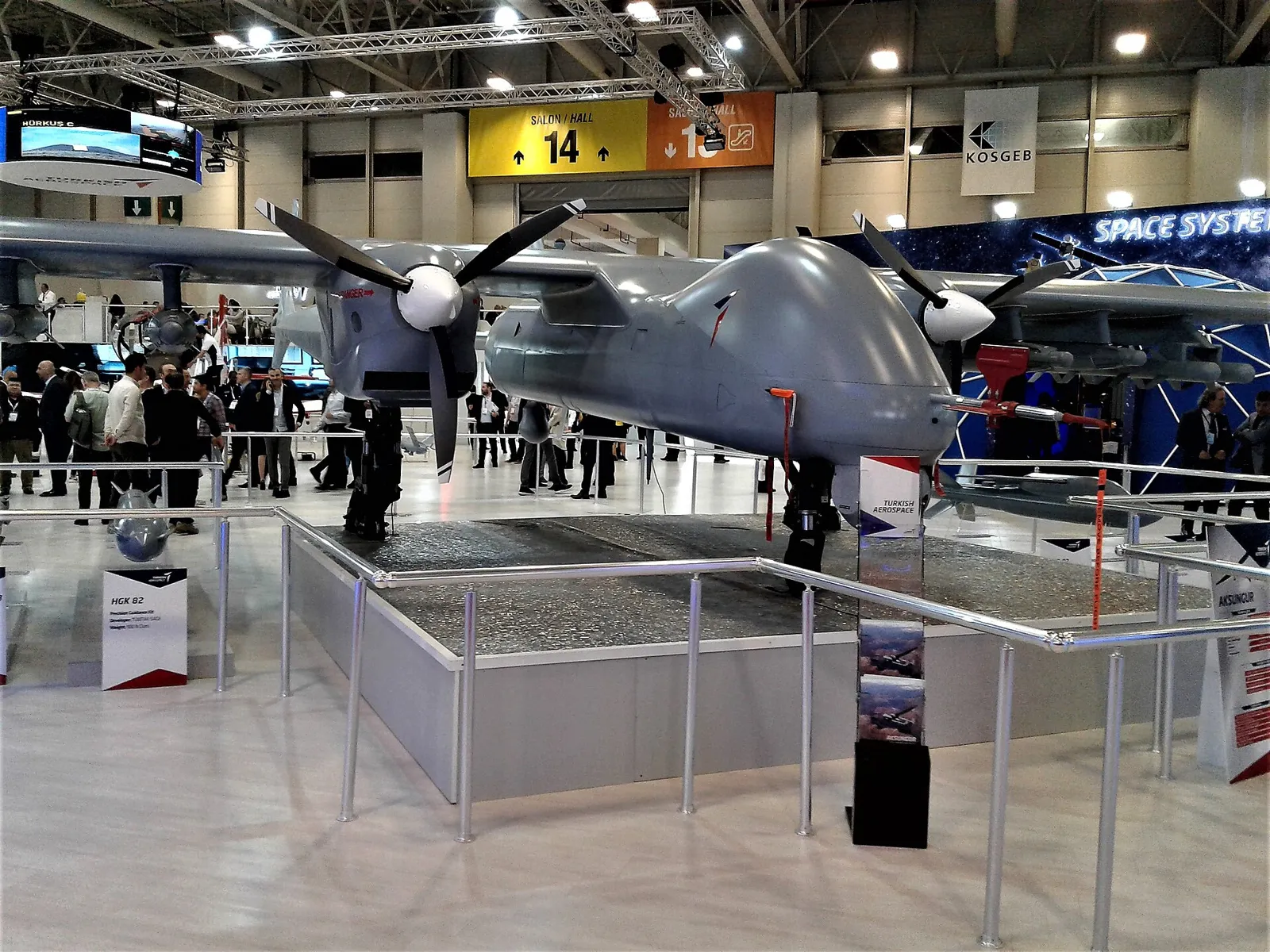
Baykar’s KALKAN — also referred to as DIHA in its technical designation — is a hybrid VTOL (Vertical Takeoff and Landing) drone that pairs electric lift motors with a combustion cruise engine. The result is a six-hour ISR platform that needs no runway, no catapult, and no recovery net: it departs and returns from wherever the operator parks it.
| Specification | Value |
|---|---|
| Max Takeoff Weight | 78 kg |
| Payload Capacity | 3 kg |
| Endurance | 6 hours |
| Max Speed | 55 KIAS |
| Cruise Speed | 48 KIAS |
| Service Ceiling | 10,000 ft |
| Operating Altitude | 6,000 ft |
| Communication Range | 80+ km |
| Propulsion | 4 electric motors + 1 combustion engine |
| Wingspan | 5 m |
| Length | 1.9 m |
| Takeoff / Landing | Full VTOL — no runway required |
The Hybrid Propulsion Logic
KALKAN uses four electric motors for the vertical transition phases — quiet, stable, and mechanically simple — then hands propulsion to a single combustion engine for horizontal cruise. This architecture solves the central tradeoff in unmanned aviation: pure multirotors have short endurance; fixed-wing drones need runways. KALKAN gets six hours of flight time from a platform weighing just 78 kg at max takeoff, deployable from the back of a truck, a ship deck, or a hillside.
Sensor Package
KALKAN carries interchangeable EO (day) and IR (night) cameras mounted on a 2-axis stabilized gimbal developed by Baykar — the BG160 EO/IR module. A multi-target tracker and laser rangefinder complete the sensor payload. Despite the 3-kg payload limit, the stabilization system keeps imagery sharp enough for target identification at the platform’s operational altitude of 6,000 feet, over an 80-km communication range.
Autonomous Operations in Difficult Environments
Sensor fusion guides KALKAN through takeoff and landing without operator input — particularly valuable in shipboard operations where the deck pitches and rolls. If communications are lost, the aircraft automatically returns to its launch point and lands. The fault-tolerant architecture means a single motor failure does not abort the mission; the system degrades gracefully and continues to the nearest safe landing zone.
Where It Fits in Turkey’s Unmanned Ecosystem
KALKAN is not a strike platform — it feeds information to platforms that are. Its role is forward ISR: getting close to what needs watching without exposing heavier assets to early detection. In a joint operation, KALKAN locates and designates; TB3 or AKINCI strikes. On TCG Anadolu, KALKAN would extend the carrier’s sensor horizon beyond what shipboard radars can cover, feeding real-time cueing data to the strike drones on deck.