Turkish Defence in the Gulf: GCC Markets Country-by-Country

Turkish Defence in the Gulf: GCC Markets Country-by-Country
The Gulf Cooperation Council states command some of the largest per-capita defence budgets in the world. Turkish industry’s relationship with each GCC member is shaped by a different combination of strategic alignment, political history and procurement priority — and the trajectory across most of them is positive.
By Country
Qatar — The deepest Turkish defence-industrial relationship in the GCC. BMC International produces armoured vehicles in Doha. Joint training, joint exercises and a continuous flow of equipment and platforms have made Qatar Türkiye’s most strategically integrated GCC partner.
United Arab Emirates — Complex history (TB2 operations in Libya were a contested issue) followed by reset. UAE now operates Turkish platforms and Emirati industry (EDGE Group) explores joint programmes with Turkish counterparts.
Saudi Arabia — Turkish-Saudi defence cooperation accelerated after 2023. Saudi Arabia ordered Bayraktar Akıncı UAVs in one of the largest export deals of the period. Discussions continue across armoured vehicles, naval platforms and electronics.
Kuwait — Long-running Turkish-Kuwaiti defence cooperation has covered training, equipment and selected platforms. Kuwait operates Turkish armoured vehicles and discussions on UAVs and naval systems continue.
Bahrain — Smaller market, but Turkish industry has established a presence through armoured vehicles and electronics. Joint training programmes complement the equipment relationship.
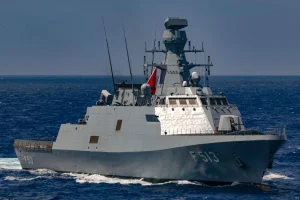
Oman — Diversified procurement across U.S., UK, French and now Turkish suppliers. Turkish naval platforms (patrol vessels) and armoured vehicles have entered the Omani inventory.
What Gulf Buyers Specifically Value In Turkish Industry
- Speed: Procurement timelines measured in months, not years.
- Political flexibility: No CAATSA-equivalent restrictions on use or onward transfer.
- Local content: Willingness to build factories, transfer technology and create jobs.
- Cultural and religious affinity: A real factor in officer-to-officer relationships.
- Combat-proven platforms: TB2, AKINCI, Atmaca all carry recent operational records.
Where The Constraints Live
The GCC defence market is a multi-supplier market by design. No GCC state will become Turkish-dependent. The opportunity for Turkish industry is to be one of three or four serious suppliers — alongside the U.S., France, the UK and increasingly China — and to win specific platform categories where the Turkish offering is sharpest.
The Bottom Line
The GCC is the most lucrative defence market Türkiye does not yet dominate. The strategic prize across the next decade is moving from “alternative supplier” to “primary supplier” in defined categories — UAVs in several states, armoured vehicles in others, naval platforms where the relationship supports it.