Why are the Gulf countries turning to the Turkish defense industry?
.emv-ar{font-family:”Noto Sans Arabic”,”Segoe UI”,Arial,sans-serif;color:#0f172a;line-height:1.85;max-width:880px;margin:0 auto;direction:rtl;text-align:right}
.emv-ar *{box-sizing:border-box}
.emv-ar-hero{background:linear-gradient(225deg,#0b1d3a,#163a6e);color:#fff;padding:36px 28px;border-radius:12px;margin-bottom:24px}
.emv-ar-hero .eyebrow{display:inline-block;font-size:12px;letter-spacing:1.5px;color:#f2a024;border:1px solid rgba(242,160,36,.5);padding:4px 11px;border-radius:16px;margin-bottom:12px}
.emv-ar-hero h2{font-size:26px;color:#fff;margin:0 0 10px;font-weight:800;line-height:1.3}
.emv-ar-hero p{color:#cbd5e1;font-size:16px;margin:0}
.emv-ar h3{font-size:20px;color:#0b1d3a;margin:28px 0 10px;font-weight:800;border-right:4px solid #f2a024;padding-right:12px;border-left:none;padding-left:0}
.emv-ar p{margin:0 0 14px;font-size:16px}
.emv-ar ul{margin:0 18px 16px 0;padding:0}
.emv-ar li{margin-bottom:8px;font-size:16px}
.emv-ar-table{width:100%;border-collapse:collapse;margin:18px 0;font-size:15px;background:#fff;border-radius:8px;overflow:hidden;border:1px solid #e2e8f0}
.emv-ar-table th{background:#0b1d3a;color:#fff;padding:11px 10px;text-align:right;font-weight:700}
.emv-ar-table th:not(:first-child){text-align:center}
.emv-ar-table td{padding:10px;border-bottom:1px solid #e2e8f0}
.emv-ar-table td:not(:first-child){text-align:center}
.emv-ar-table td:first-child{font-weight:600;color:#0b1d3a;background:#f8fafc}
.emv-ar-callout{background:#fff7ed;border:1px solid #fed7aa;border-right:4px solid #f2a024;border-radius:8px;padding:18px 22px;margin:22px 0}
.emv-ar-callout h4{font-size:14px;letter-spacing:1px;color:#9a3412;margin:0 0 8px;font-weight:800}
.emv-ar-callout p{margin:0;font-size:16px;color:#431407}
.emv-ar-sources{background:#f8fafc;border:1px solid #e2e8f0;border-radius:8px;padding:14px 18px;margin:24px 0;font-size:14px;color:#475569}
.emv-ar-sources strong{color:#0b1d3a}
Why Gulf Countries Are Turning to Turkey’s Defense Industry
In the last five years, Turkey has gone from being a secondary market for the Gulf Cooperation Council (GCC) countries to becoming their main supplier. The question is no longer whether Gulf countries will buy from Turkey, but what they will buy, when, and through what kind of partnerships. In this article, we will explore the structural reasons underlying this shift.
Rapid Deliveries
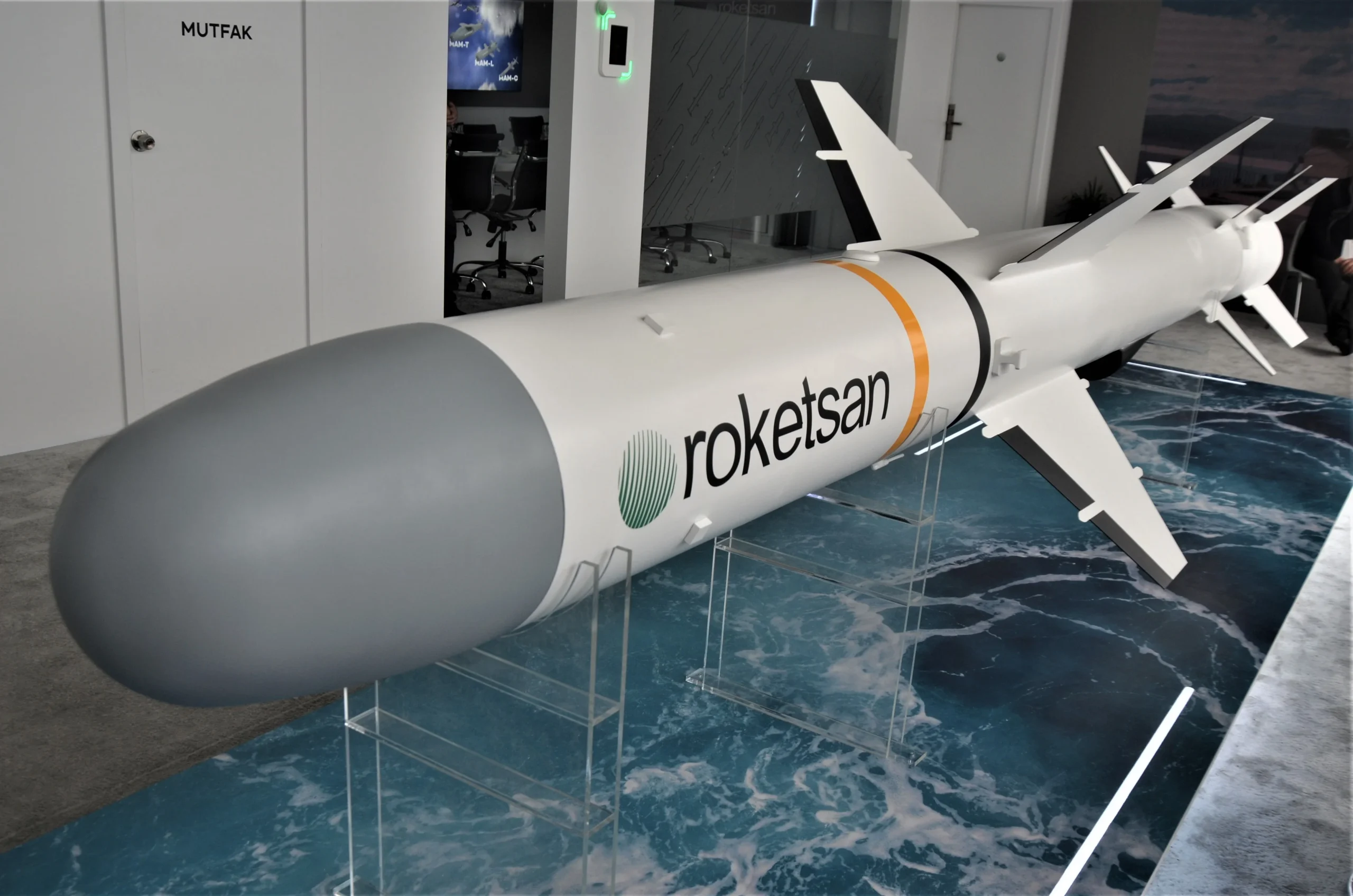
In a defense market where delivery times are measured in months, not years, Turkey stands out. Bayraktar TB2 drones can be delivered within 12 to 18 months of contract signing, and Roketsan’s missiles have a similar delivery schedule. In comparison, U.S. approval for F-35 fighter jets or Patriot systems can take years, sometimes even up to a decade.
Political Flexibility
U.S. missiles and systems come with export restrictions, such as strict end-user conditions (end-user monitoring) and the International Traffic in Arms Regulations (ITAR). Turkey’s equivalent restrictions are far more lenient. This means any Gulf country can purchase Turkish drones and use them in operations that Washington might oppose.
Technology Transfer and Local Production
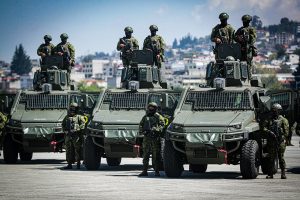
Qatar is producing BMC armored vehicles in Doha. Saudi Arabia is negotiating a full technology transfer. Turkey offers a “buy-and-build” model: acquire the system and establish the factory. The United States is more reluctant to offer this model, while China does so at a different cost.
Cultural and Religious Compatibility
This is a pragmatic factor. Training can be conducted in Arabic. Turkish officers communicate with their Gulf counterparts more quickly and with less friction than other alternatives. This shortens the learning curve and reduces the need for intermediaries.
Combat Record
The Bayraktar TB2 drone has proven its effectiveness in Syria, Libya, Karabakh, and Ukraine. The Atmaca anti-ship missile is also in service. This is not a marketing pitch, but a real combat record that procurement officials in Riyadh, Abu Dhabi, and Doha are closely examining.
Summary
Gulf states are turning to Turkey for a simple logic: reasonable performance, delivered at a reasonable speed, and at a reasonable price, without complex political strings attached. It’s a package Washington does not offer; Moscow’s comes with the risk of sanctions, and Beijing’s, while cheaper, lacks political leverage.