What is the B-21 Raider? What is it used for? Northrop Grumman’s 6th Generation Stealth Bomber

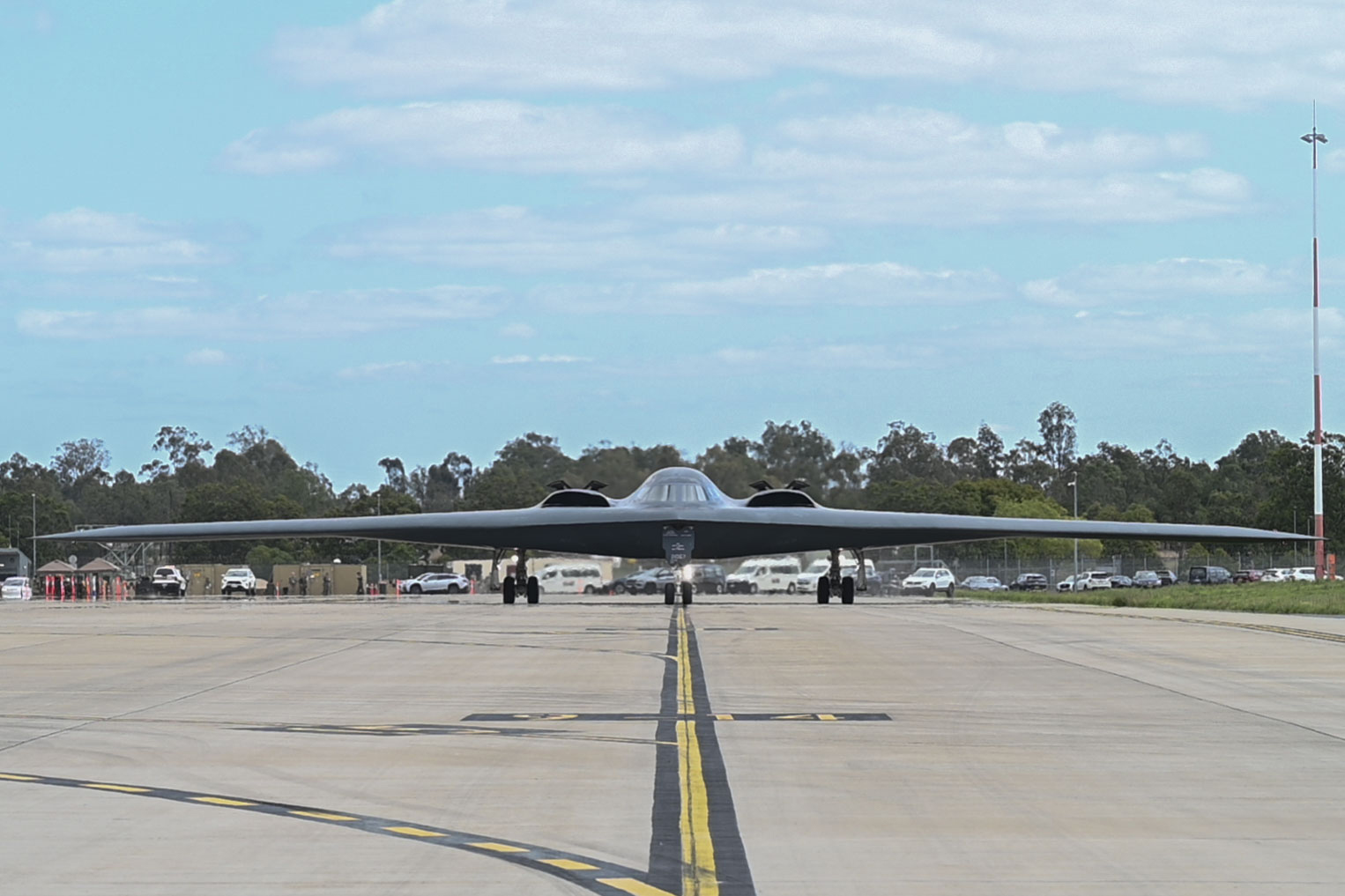
After the Cold War, the only invisible bomber of the USA, the B-2 Spirit, is a fleet that has dwindled to just 19, costing billions of dollars and becoming outdated. The new generation that will replace it is the B-21 Raider — Northrop Grumman’s 6th generation stealth bomber, with plans for 100 units on the production line and entering the inventory earlier than expected due to an official production acceleration agreement. In this article, we explain what the B-21 is, what it does, how much it costs, and why Turkey has approached its long-range strike capability with a different philosophy, in simple terms — but without losing technical details.
What is the B-21 Raider?
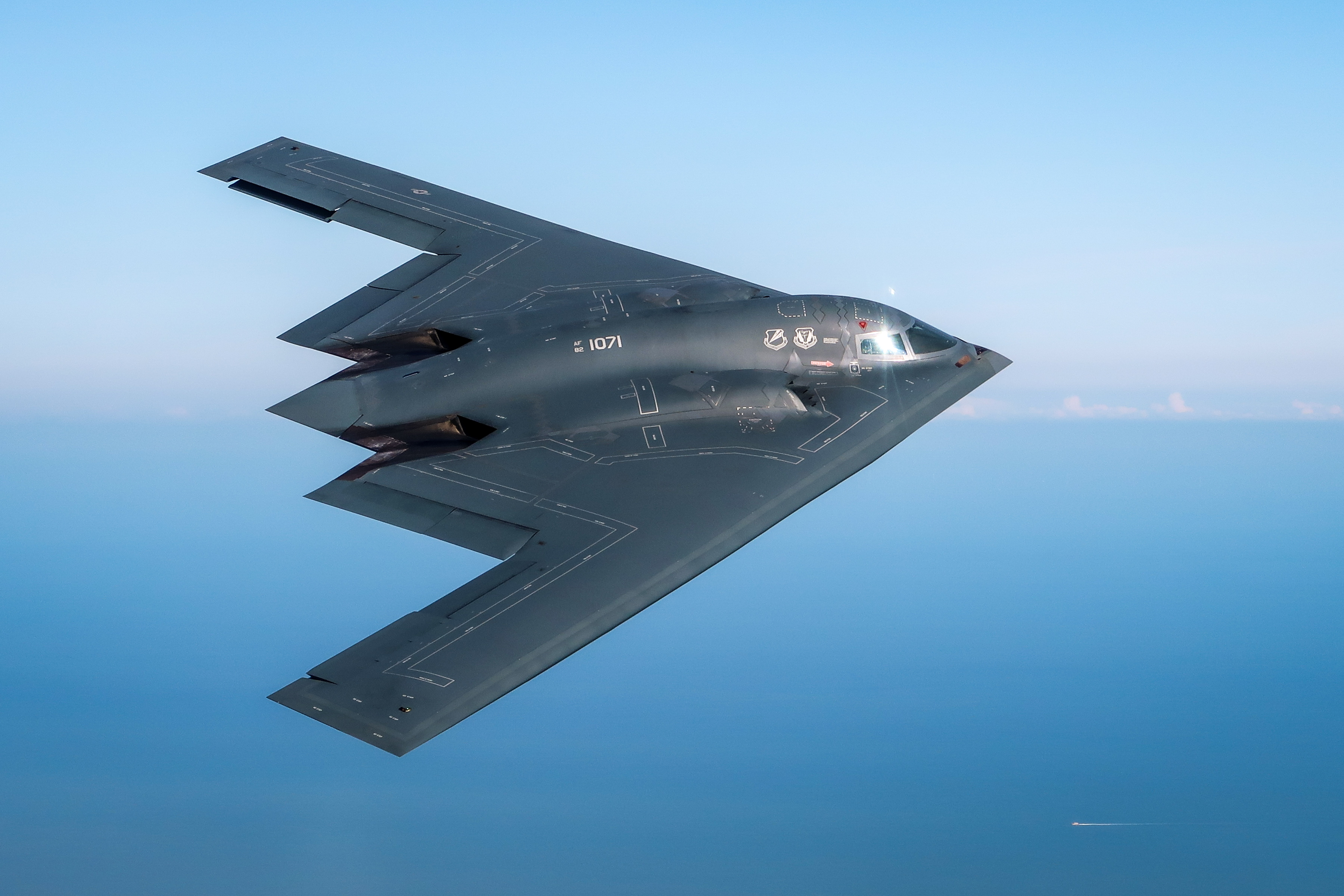
The B-21 Raider is a twin-engine, flying-wing strategic bomber developed by the U.S. Air Force (USAF) under the Long Range Strike Bomber (LRS-B) program. The program started in 2014, the contract was awarded to Northrop Grumman in 2015, and the aircraft was publicly introduced on December 2, 2022, at Palmdale-Plant 42, making its first flight on November 10, 2023, at Edwards Air Force Base.
The name “Raider” comes from the Doolittle Raiders who struck Tokyo during World War II — a clear reference to the tradition of long-range, risky, strategic strikes. It shares the same flying-wing aerodynamic logic as the B-2 Spirit but differs in the following points:
- Open architecture (Open Mission Systems): Software and hardware are modular — future weapons and sensors are integrated as “plug-ins.”
- Manned and unmanned hybrid mission: The first production version is piloted, but the platform is designed to be ready for unmanned operations.
- Digital stealth: Multi-layered invisibility against enemy radar not only through shape but also through surface coatings (RAM — radar-absorbing material) and electronic warfare systems.
- Lower maintenance cost: The B-2 consumes 50% of its flight hours while in the hangar; the B-21 is designed with a modular maintenance logic for “forward base” operations.
What is it Used For?
- Strategic nuclear deterrence: The B-21 will shoulder the air leg of the U.S. nuclear triad (land/sea/air) after the retirement of the B-1B and B-52. It is compatible with the B61-12 and future LRSO cruise missiles.
- Conventional long-range strike: Penetration into anti-access/area denial (A2/AD) environments with hypersonic munitions (like ARRW), JASSM-ER, and large bunker-buster bombs like the GBU-57 MOP.
- Intelligence, reconnaissance, surveillance (ISR): It can enter enemy radar coverage to perform both target detection and electronic warfare. It serves as the central platform for the “penetrating counter-air” doctrine.
- Command-control node: Thanks to its open architecture, it acts as a central node for information sharing with NGAD fighter jets, CCA unmanned combat aircraft, and satellites.
Technical Specifications
| Feature | Value (described) |
|---|---|
| Crew | 2 (compatible with unmanned operations) |
| Architecture | Flying-wing (tailless) |
| Engine | 2 × Pratt & Whitney PW9000 family (stealth, B-2 F118 derivative) |
| Size | Smaller than B-2; estimated wingspan ~40 m |
| Range | 9,300+ km (without refueling) |
| Internal payload | ~14 tons (less than B-2’s ~18 tons; efficiency prioritized) |
| Stealth generation | 6th generation (RCS claim not “star” but “bug-level”) |
| Avionics | Open Mission Systems (OMS), distributed sensor fusion |
| EW suite | Wideband adaptive electronic warfare, internal |
| Nuclear capability | B61-12 gravity bomb + LRSO cruise missile (in development) |
| Conventional munitions | JASSM-ER, JDAM, GBU-57 MOP, ARRW (hypersonic) |
| Refueling | Air refueling — compatible with KC-46 / KC-135 |
Who is Buying, at What Price?
The B-21 is currently being purchased only by the U.S. Air Force. The contract structure is as follows:
| Operator | Quantity | Cost / Year |
|---|---|---|
| U.S. Air Force (USAF) | At least 100 (LRIP has started) | ~692 mn USD/aircraft (FY2022) — total ~200 bln USD program |
| U.S. (production acceleration) | +25% production rate | 4.5 bln USD additional contract (2025) |
| Australia (negotiation) | Exit permission obtained (2024) | Not disclosed, under AUKUS Pillar 2 |
B-21 export license is limited — it is reported to be open only to Five Eyes allies under U.S. ITAR regulations. Australia requested it in 2024; the decision process is ongoing.
Turkish Strategy — A Different Philosophy
There is no direct equivalent to the B-21 in Turkey’s “long-range strike” equation — as neither the needs nor the doctrine are shared. Turkey addresses the same mission with three different platforms, at a higher cost-effectiveness ratio:
| Criterion | B-21 Raider | Turkish Doctrine |
|---|---|---|
| Philosophy | Manned stealth platform | Hybrid: unmanned + ballistic missile + cruise missile |
| Long-range strike | B-21 + JASSM-ER (~1000 km) | TAYFUN (>500 km) + GEZGİN cruise missile (>800 km) |
| Stealth platform | B-21 (~692 mn USD/aircraft) | KAAN (5th generation fighter jet) + KIZILELMA jet-UAV |
| Unmanned strike | B-21 (unmanned capable) | AKINCI + AKSUNGUR + KIZILELMA |
| Nuclear deterrence | B61-12, LRSO | NATO nuclear sharing (İncirlik) + conventional deterrence |
| Unit cost | 692 mn USD | TAYFUN: ~3-5 mn USD/missile, KIZILELMA: ~30 mn USD |
| Export independence | ITAR restricted, only 5 Eyes | 100% domestic, open to export |
The path of the Turkish defense industry is not B-21 but asymmetric superiority: ballistic missiles arrive at the target seconds before, jet-UAVs are produced at a fraction of the cost of manned aircraft, and unmanned systems with stealth profiles like KIZILELMA reach their targets without being detected by enemy radar. This doctrine is most suitable for NATO’s European wing; it is not the same as the geographical requirements of the US in the Pacific.
Other Global Counterparts
- Xian H-20 (China): Not yet flown, rumored flying-wing design. Produced by AVIC. The closest direct competitor to the B-21.
- PAK-DA (Russia): Tupolev’s strategic stealth bomber program. In development since 2018, with the first flight targeted for 2027.
- B-2 Spirit (predecessor): First flight in 1989, still active with 19 aircraft. Unit cost ~2.1 billion USD (including inflation).
- B-52H Stratofortress: Entered service in 1955, still performing strategic bombing missions, a classic of the US. Not stealth, but a complement to the B-21 in range and payload.
- B-1B Lancer: Supersonic variable-sweep wing bomber, heading towards retirement alongside the B-21.
Frequently Asked Questions
No official information — but Northrop claims “bug-sized RCS (radar cross-section).” The B-2’s RCS is about the size of a small bird; the B-21 is said to be much lower than this.
Yes. Hypersonic (Mach 5+) munitions like the AGM-183A ARRW are being tested in the B-21’s internal weapon bay. It is also compatible with JASSM-ER and long-range LRSO cruise missiles.
No. Due to ITAR restrictions and nuclear architecture, the B-21 is only open to Five Eyes allies. Turkey’s roadmap is progressing through the KAAN + TAYFUN + KIZILELMA trio.
Ellsworth Air Force Base will receive the first operational fleet in 2027. The production line was accelerated by 25% in 2025 (additional contract of 4.5 billion USD).
Yes, gradually. By the 2030s, 19 B-2s will be retired; over 100 B-21s will be produced to replace them.
The platform is designed for unmanned flight, but the first production version is manned. Future autonomous missions are possible with software updates.
Conclusion
The B-21 Raider is a tool designed for the US’s global power projection — a symbol of long-range stealth strike capability in the Asia-Pacific. It is not a direct counterpart for Turkey; because the Turkish defense industry solves the same task with ballistic missile + unmanned aerial vehicle + jet-UAV trio, maintaining export independence and at a much lower unit cost. The stealth profile of KAAN, the unmanned jet configuration of KIZILELMA, the range of TAYFUN, the payload capacity of AKINCI — all work as a doctrine operating as a network rather than compressing into a single platform. The B-21 is an impressive engineering achievement; but the Turkish path is a different engineering success.
Related News
Northrop Grumman — U.S. Defense Industry Company
Manufacturer file: history, product portfolio, global export profile.
B-21 Production Acceleration — $4.5 Billion
U.S. Pentagon agreement for 2025.
What is the F-22 Raptor?
The U.S.’s 5th generation air superiority jet — the protective escort for the B-21.
What is the AGM-158 JASSM?
The stand-off strike element of the B-21’s internal weapon load.
Sources
- Northrop Grumman — B-21 Raider press page (northropgrumman.com)
- U.S. Air Force — B-21 Raider official fact sheet (af.mil)
- Wikipedia — “Northrop Grumman B-21 Raider”
- Air Force Magazine — B-21 LRIP reports (2023-2025)
- The Aviationist — B-21 first flight and introduction analyses
- Defense News — B-21 production acceleration contract (2025)