What Is AESA Radar? Modern Fighter Radar Explained
# What Is AESA Radar? Modern Fighter Radar Explained
Quick answer: AESA stands for Active Electronically Scanned Array. Instead of one big antenna that physically spins, an AESA radar uses thousands of tiny radar transmitters in a flat array. The radar beam is steered by electronics — instantly, in any direction — without any moving parts.
AESA is now the standard for every modern fighter and most warships.
How AESA Differs From Old Radars
| Old Radar (Mechanical) | AESA Radar |
|---|---|
| Big spinning dish | Flat array of small modules |
| Single transmitter | Thousands of mini-transmitters |
| One beam, one direction | Can split into many beams |
| Slow to refresh | Updates in milliseconds |
| Easy to detect | Low Probability of Intercept (LPI) |
| Single frequency | Hops frequencies thousands of times/sec |
| One mode at a time | Search + track + map + jam simultaneously |
| Mechanical wear | No moving parts; very reliable |
How It Works (Simple)
An AESA array has 1,000–2,000 small Transmit/Receive (T/R) modules, each the size of a matchbox. Each module:
- Transmits a tiny radar signal
- Receives echoes
- Has its own phase shifter
By controlling the timing (phase) of each module, the whole array steers the radar beam electronically in any direction. Steering takes microseconds — far faster than any mechanical antenna.
Why AESA Is a Game-Changer
- 1. Multiple jobs at once: track 100+ targets, scan new sectors, jam an enemy radar — all simultaneously
- 2. LPI (Low Probability of Intercept): uses very low power per pulse and rapidly changes frequency, making it nearly impossible for enemy RWR (Radar Warning Receivers) to detect
- 3. High reliability: if 10% of modules fail, the radar still works at 90% capacity
- 4. High resolution: can map ground in SAR mode like a satellite image
- 5. Electronic attack: can focus full power into a narrow beam to jam or burn out enemy electronics
- 6. Air-to-air + air-to-ground simultaneously — no need to switch modes
Famous AESA Radars
| Radar | Aircraft | Country |
|---|---|---|
| APG-77 | F-22 | USA |
| APG-81 | F-35 | USA |
| APG-82 | F-15EX | USA |
| APG-83 SABR | F-16V | USA |
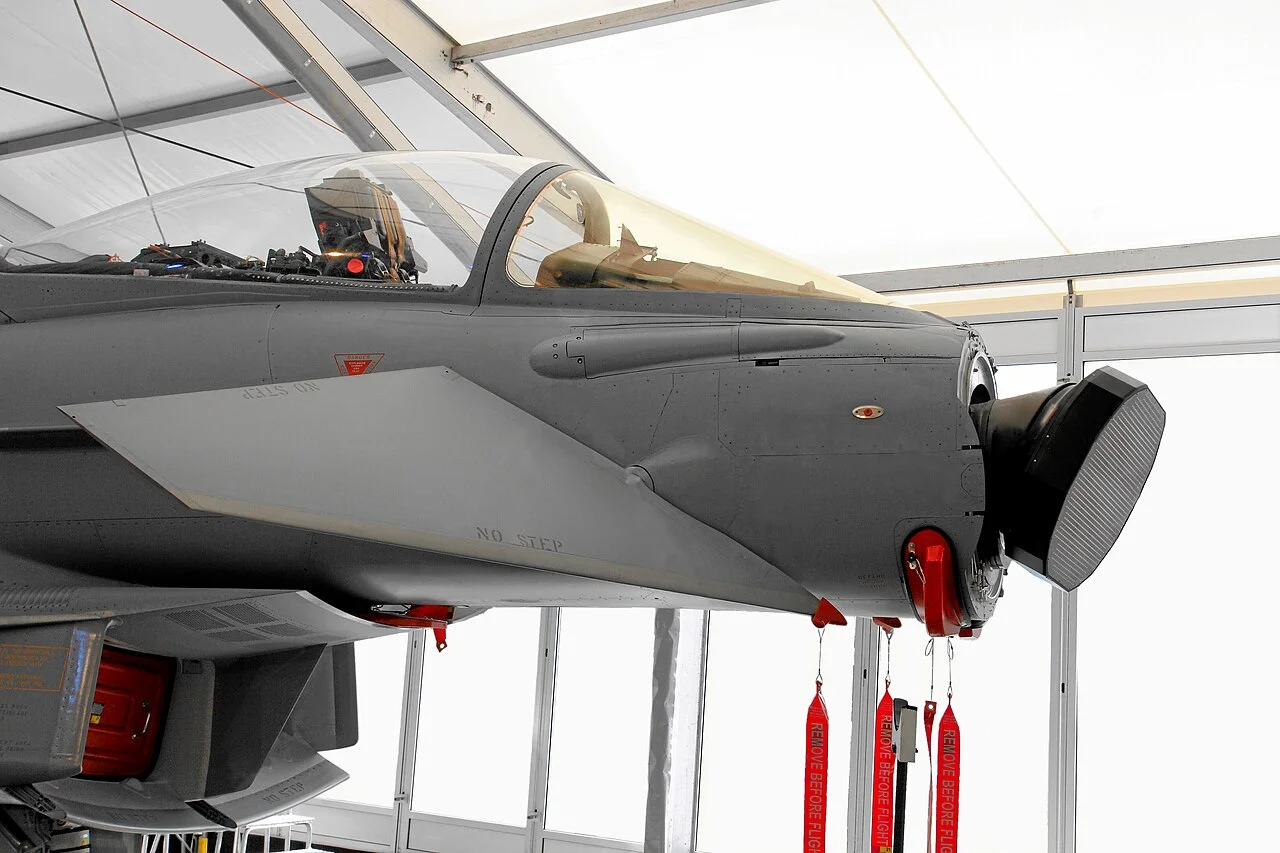
| CAPTOR-E | Eurofighter (latest) | UK/EU |
| RBE2-AA | Rafale F3R+ | France |
| Zhuk-AE | MiG-35 / Su-30 export | Russia |
| Belka | Su-57 | Russia |
| AN/APG-79 | Super Hornet | USA |
| NG-AESA | KAAN (Türkiye, in development by Aselsan + MURAD) | Türkiye |
| PESA Bars / Irbis-E (older PESA) | Su-35 | (passive, transitional) |
AESA vs PESA — Quick Distinction
There are two types of electronically scanned radar:
- PESA (Passive ESA): one transmitter + array of phase-shifting receivers. Cheaper, less capable. Examples: Irbis-E (Su-35).
- AESA (Active ESA): each module has its own transmitter and receiver. More expensive, far more capable.
Most modern designs use AESA.
Why AESA Defeats Stealth (Partly)
A normal radar has trouble seeing stealth aircraft because of low RCS. But AESA can:
- Concentrate massive power in a narrow scan sector
- Combine many returns into a coherent picture
- Use multistatic detection — multiple AESAs networked together share data
- Process with advanced algorithms (Doppler, micro-Doppler signatures)
Several reports suggest modern AESAs detect stealth fighters at meaningful ranges — though exact numbers are classified.
AESA for Ships and Air Defense
AESA is also used on:
- Aegis ships (SPY-1, SPY-6)
- Patriot upgrades (LTAMDS)
- S-400 / S-500 Russian SAMs (modern variants)
- Iron Dome successors
- Korkut and Hisar systems (Türkiye)
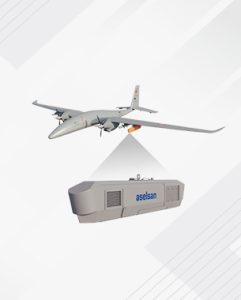
- MEROPS / MURAD AESA (Aselsan, Türkiye)
How a Pilot Uses AESA
In a 5th-gen cockpit, the pilot doesn’t see “radar blips” anymore. The AESA’s data fuses with IRST, EW, and friendly data link into a single tactical picture. The pilot sees:
- Friendly aircraft (blue)
- Enemy aircraft (red)
- Unknown contacts (yellow)
- Suggested intercept angles
- Predicted enemy weapons range
This is sensor fusion — and AESA is its backbone.
A Kid-Friendly Analogy
Imagine standing in a dark room with one flashlight (old radar) — you can only look in one direction.
Now imagine you have a wall of 1,000 tiny LEDs (AESA), each one a mini-flashlight. By turning them on/off and shifting timing, you can make a beam point anywhere, instantly, even split into multiple beams at once. You can light up the whole room, or focus a laser beam at one spot.
That’s the difference between an old radar and AESA.
Cost and Maintenance
AESA radars are expensive — a single fighter AESA can cost $5–15 million. But:
- No moving parts → reliability is much higher
- Many modules → graceful degradation
- Lifecycle cost lower than mechanical radars
For navies, ship AESAs can cost $300 million+ (SPY-6, S-400 grand radar) — but they’re worth it.
The Future — GaN AESAs
Modern AESAs use GaN (Gallium Nitride) instead of older GaAs. GaN allows:
- 3–5× more power per module
- Better cooling
- Longer detection range
- Better jamming resistance
USA’s LTAMDS, Russian S-500, and most new Türkiye AESAs use GaN technology.
Image Suggestions
- 1. Featured: AESA array close-up (T/R modules grid)
- 2. Beam-steering animation diagram
- 3. APG-81 (F-35 radar) being installed in fighter nose
- 4. Multi-beam AESA showing simultaneous tasks
- 5. AESA vs PESA architecture comparison
Related Articles
- What is radar?
- What is stealth technology?
- What is sensor fusion?
- What is BVR combat?
- What is electronic warfare?