TKMS and Navantia signed a second memorandum to deepen their partnership on submarines.

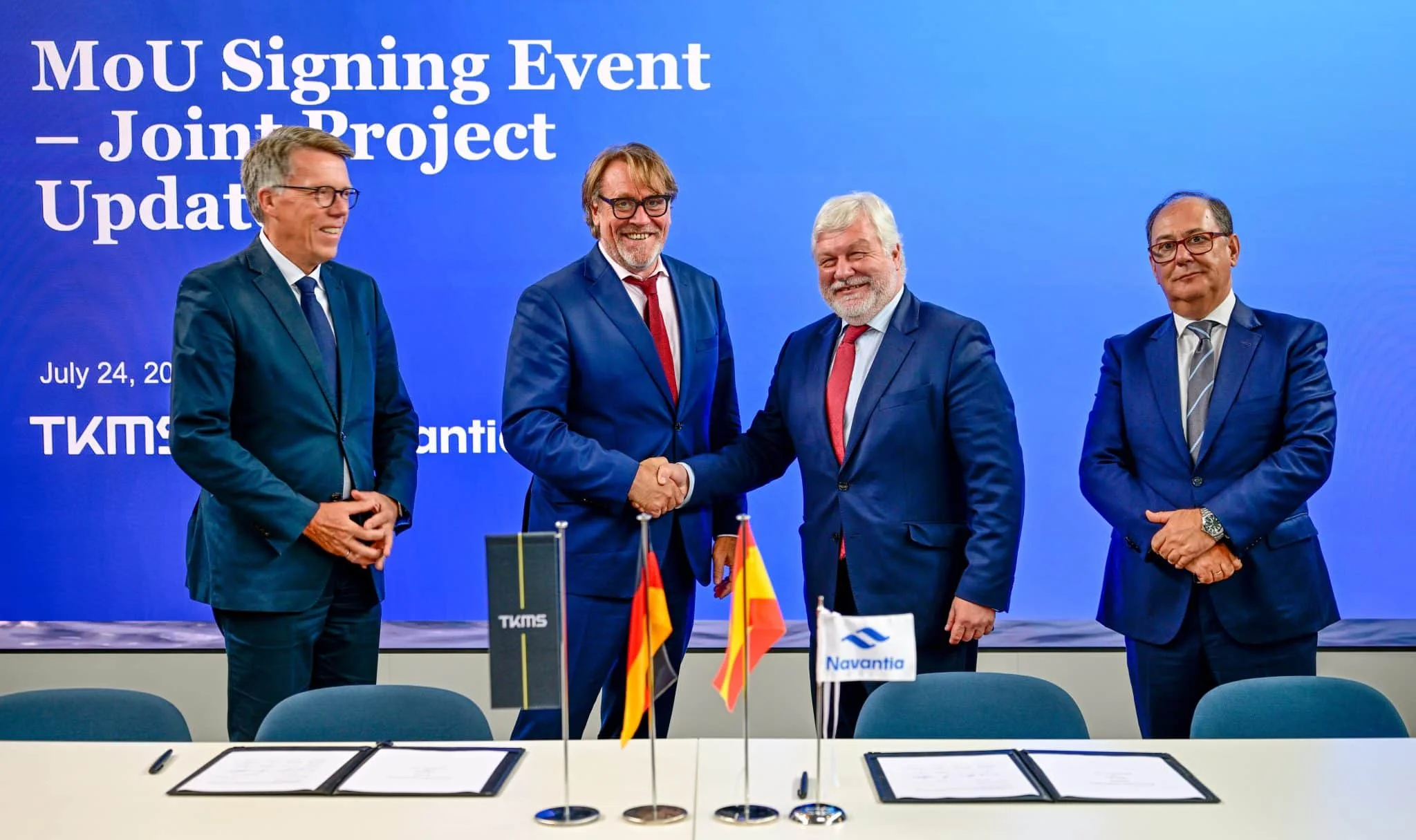
The two largest European submarine manufacturers — the German TKMS (thyssenkrupp Marine Systems) and the Spanish Navantia — have signed a second memorandum of understanding (MoU) to deepen their strategic partnership in the submarine sector. According to Naval News, the companies plan to create a joint framework for cooperation by the end of the year, covering joint production and marketing of selected submarine projects.
The agreement is based on expanding production capacities, improving delivery schedules, long-term technological partnerships, and strengthening competitive positions in international markets. Both parties emphasized that the cooperation is not a merger and does not involve the transfer of shares or assets: each company maintains its independent operations, and existing contracts and programs are not affected.
Statements from Executives
TKMS CEO Oliver Burkhard stated that “the security of Europe requires a stronger and more resilient industrial base,” calling the deal a strengthening of Europe’s industrial base and sovereignty. Navantia’s Executive Chairman Ricardo Dominguez noted that the memorandum “highlights Navantia’s capabilities in submarines and strengthens our presence in this market.”
Navantia’s Chief Operating Officer Gonzalo Mateo-Gerrero clarified the boundaries of the cooperation: “Each company retains its own technologies and design authorship in its programs.” This emphasis indicates a partnership built around capabilities and marketing rather than technology exchange.

Two Different Submarine Traditions
TKMS builds the Type 212 and Type 214 classes with air-independent propulsion (AIP), widely represented in export markets; its latest product, the Type 212CD, is being built for Germany and Norway. Navantia is known for the S-80 class, developed for the Spanish Navy; the lead submarine, Isaac Peral, is already in service.
The merger of the two manufacturers reflects the desire to create economies of scale in European submarine construction by combining complementary capabilities of the programs that each was pursuing separately.
Framework for European Defense Autonomy
The agreement adds another example to the trend of consolidation in Europe’s defense industry amid growing geopolitical pressure. The pan-European need to modernize submarine fleets is pushing manufacturers to combine capacities and accelerate deliveries. Such partnerships may also change the competitive landscape for other manufacturers in the same export markets.
Sources
- Naval News – “TKMS and Navantia Advance Strategic Submarine Partnership” – July 24, 2026. Link
- Corporate information from TKMS and Navantia — for submarine classes and program background.