Portuguese Navy Conducts Unmanned Systems Flight Trials Aboard Frigate NRP Álvares Cabral

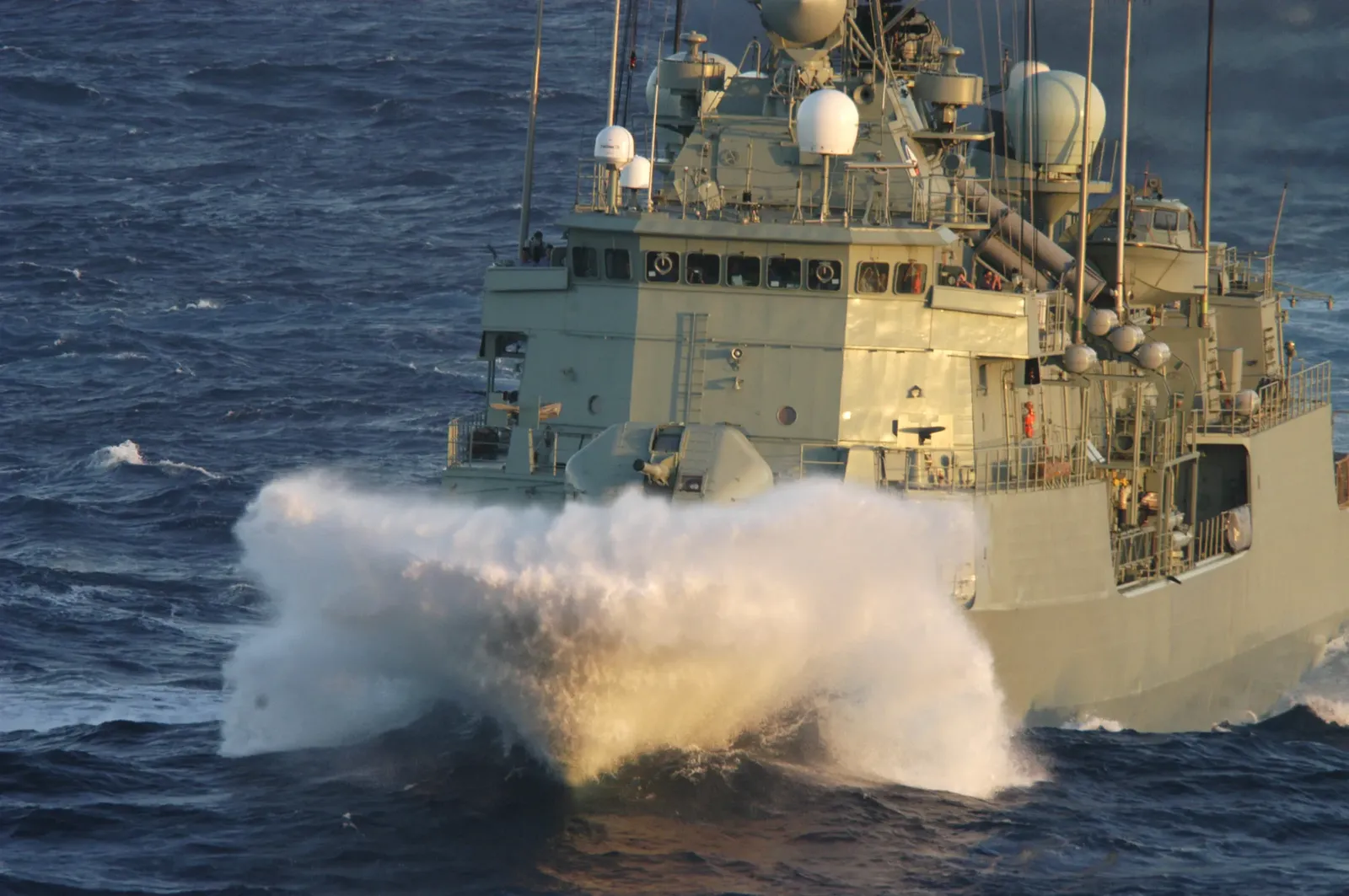
The Portuguese Navy has carried out shipborne flight trials of unmanned aerial systems aboard the Vasco da Gama-class frigate NRP Álvares Cabral (F331). The trials were conducted by X31, the service’s specialist unmanned systems unit, while the frigate was deployed on the “Iniciativa Mar Aberto 2026” mission.
At a Glance
- The trials took place on 18 August 2026.
- Platform: Vasco da Gama-class frigate NRP Álvares Cabral (F331).
- Conducted by: X31, the Portuguese Navy’s unmanned systems specialist unit.
- Objective: validating operating procedures, safety arrangements and interoperability under demanding naval conditions.
- Context: part of the frigate’s deployment on the Iniciativa Mar Aberto 2026 mission.
Background
Portugal has been steadily building up its investment in unmanned maritime and aerial systems. In April 2026, Dutch shipbuilder Damen launched a multi-purpose vessel built at its Romanian facility for the Portuguese Navy, a platform with drone-launch capability that has been informally dubbed a “drone carrier.” The latest trials aboard Álvares Cabral fit into a broader push by small and medium-sized NATO southern-flank navies to integrate unmanned aerial systems into their existing surface fleets rather than waiting for entirely new platforms. The Vasco da Gama class, based on the MEKO 200PN design, forms the backbone of Portugal’s principal surface combatants.
Across European navies, shipborne UAS operation is increasingly treated as a standard capability rather than an experimental add-on, driven by demand for persistent reconnaissance, surveillance, target acquisition and reduced crew risk. For fleets with constrained budgets, integrating drones onto existing frigates is seen as a comparatively low-cost way to extend operational reach and situational awareness without new hull acquisitions.
Regional Impact
Portugal’s move fits a broader NATO-wide trend of integrating unmanned systems onto surface combatants. Among NATO navies — including Turkey’s — low-cost UAS integration onto existing frigate and corvette fleets is being closely watched as a modernization method that avoids costly new-build programs. Turkish defense firms such as ASELSAN and Baykar, which have developed naval-oriented unmanned systems and integration packages, offer experience that could be relevant to allied navies pursuing similar upgrades. Trials like this one also accelerate the sharing of doctrine and standard operating procedures across the alliance.
FAQ
Which UAS type was used? Available reporting does not specify the exact drone model; the trials focused on validating general operating procedures and safety.
Is this a first for the class? The trials aboard Álvares Cabral mark a concrete step in the Portuguese Navy’s effort to integrate unmanned systems into its existing surface fleet.
What comes next? If the trials prove successful, similar tests are expected to extend to other Vasco da Gama-class frigates, with standard operating procedures to follow.
Sources
- Naval News, “Portuguese Navy Tests UAS Aboard Frigate NRP Álvares Cabral” (August 2026)
- Naval News, “Damen launches ‘Drone Carrier’ for the Portuguese Navy” (April 2026)