India opens formal process to join French-led FCAS fighter program

India’s Ministry of Defence has confirmed to parliament that it has initiated steps to join the French-led FCAS sixth-generation fighter program, choosing it over the UK-Italy-Japan GCAP.
At a Glance
- MoD document submitted to parliament in August 2026 confirms ‘determined initiative’ for joint participation
- New Delhi picked FCAS over GCAP (UK-Italy-Japan)
- No investment figure or timeline disclosed; parliamentary defence committee has asked for a detailed roadmap
- FCAS split in June 2026 after the France-Germany workshare and IP dispute; Paris had been seeking partners
- Program offers India access to MUM-T, AI mission systems and combat cloud architecture
- Backdrop: talks on 114 more Rafales and joint AMCA engine work with Safran
A step confirmed in parliament
India has begun a formal process to join the Future Combat Air System (FCAS), the French-led sixth-generation fighter program. In a document submitted to parliament in August 2026, the Ministry of Defence confirmed that a determined initiative had been launched for joint participation, The Defense Post reported on 10 August 2026. New Delhi opted for FCAS over GCAP, the rival effort run by the United Kingdom, Italy and Japan.
Neither an investment figure nor a timeline has been disclosed. The Parliamentary Standing Committee on Defence has asked the ministry for a detailed roadmap, and the scope of workshare and technology transfer remains undefined at this stage.
FCAS after the German exit
FCAS fractured in June 2026 when the dispute between France and Germany over workshare, intellectual property and specifications became terminal, leaving Paris searching for new partners to sustain the program. Indian participation would address the funding and scale gap left by Berlin’s departure.
For India, the program offers access to manned-unmanned teaming, AI-driven mission systems and a combat cloud architecture — a sixth-generation technology channel that could run in parallel with the indigenous AMCA fighter effort.
A widening Paris-New Delhi axis
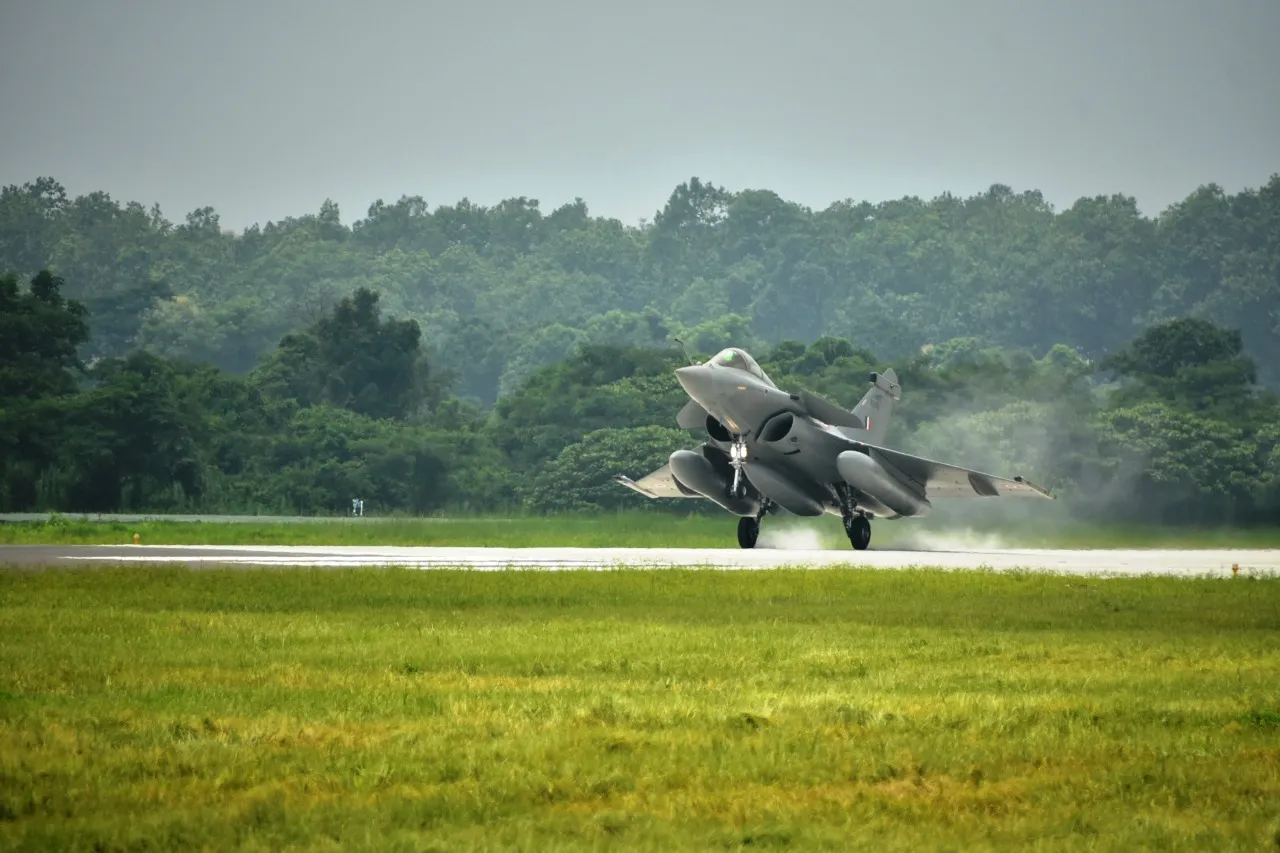
The FCAS move extends an already broad defence relationship. The two countries are negotiating the purchase of 114 additional Rafales, and Safran is working with India on joint engine development for the AMCA. Shared requirements for carrier-compatible fighters and airborne nuclear deterrence further align the two air arms.
The driver is China. The growth of the J-20 and J-35 fleets and Beijing’s flight tests of sixth-generation prototypes are compressing India’s air superiority timeline, making a shared program a hedge against waiting for AMCA to mature.
Why It Matters
The sixth-generation landscape is consolidating into three poles: FCAS with France and India, GCAP with the UK, Italy and Japan, and the US F-47. Where a program lands its partners now will shape fighter supply chains, export blocs and interoperability for decades.
India’s choice also shows how existing procurement ties steer program alignment: the Rafale fleet and the Safran engine partnership made France the path of least resistance over GCAP, a dynamic every fighter-exporting nation will study.
Frequently Asked Questions
Has India formally joined FCAS?
Not yet. The MoD confirmed a formal initiative for joint participation; terms, investment and timeline are undisclosed.
Why FCAS instead of GCAP?
Existing Rafale and Safran ties, plus overlapping needs for carrier-compatible fighters and airborne nuclear deterrence, favoured the French program.
What does India gain?
Access to manned-unmanned teaming, AI mission systems and combat cloud technology alongside its indigenous AMCA program.
Sources
- The Defense Post — India’s FCAS accession process, parliamentary document and committee request; 10 August 2026
- Envanter Medya archive — Coverage of the June 2026 France-Germany FCAS split; June 2026