GÖKBEY (T625) Helicopter Explained: Specs, TS1400 Engine, Missions & Development


The GÖKBEY (military designation T625) is a 6-tonne class, twin-turboshaft, multi-role utility helicopter designed and built by Turkish Aerospace (TUSAŞ). It is one of the flagship platforms of Turkey’s indigenous rotorcraft effort, engineered so a single airframe can move troops and cargo, evacuate casualties, run search-and-rescue, fight fires and carry VIPs. With a modern glass cockpit, a four-axis digital autopilot and a rising level of local content, the GÖKBEY is meant to serve both the Turkish Armed Forces and civil agencies from one common design.
What is the GÖKBEY used for?
The GÖKBEY follows a “one platform, many missions” philosophy. The same core airframe converts between military transport, cargo, air ambulance (MEDEVAC), search and rescue (SAR), VIP transport, offshore operations and firefighting. That flexibility lets operators consolidate mixed fleets into a single family, cutting training and sustainment costs.
Why was the T625 renamed GÖKBEY?
Known during development by its project designation T625, the helicopter received the name “GÖKBEY” on 12 December 2018, announced by President Recep Tayyip Erdoğan at the Defence Industry Summit. The Turkish-rooted name blends “gök” (sky/blue) with “bey” (a historical title of nobility). “T625” remains the technical/military designation, while “GÖKBEY” is the public and in-service name.
GÖKBEY technical specifications
Note: some outlets cite a top speed up to ~306 km/h; TUSAŞ’s official page lists max cruise speed as 297 km/h (160 kts), which Envanter Medya treats as the reference value.
GÖKBEY engine: CTS800 today, indigenous TS1400 next
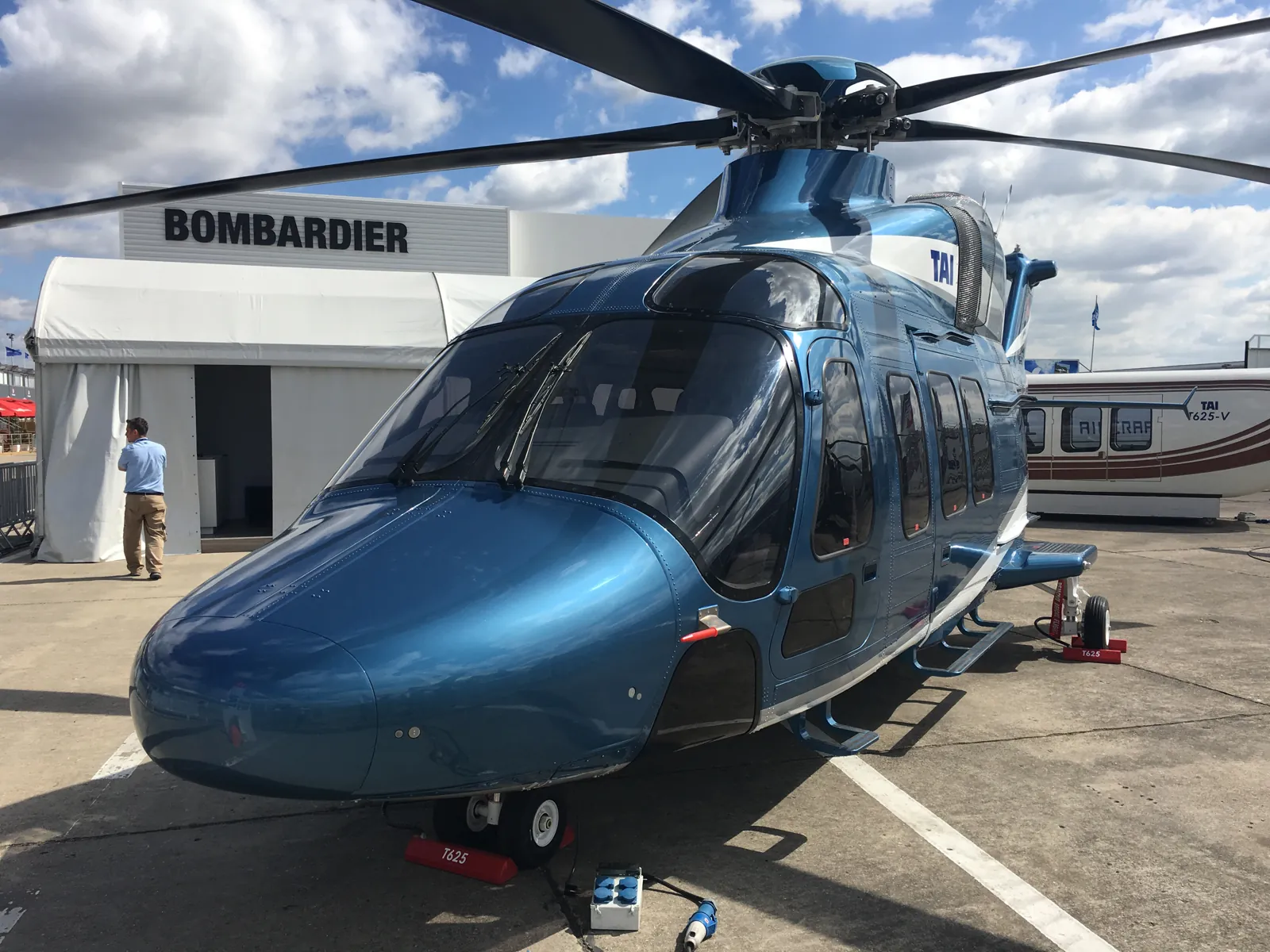
Serial GÖKBEYs currently fly on two LHTEC CTS800-4AT turboshafts (about 1,373 shp / 1,024 kW each, FADEC-controlled). Turkey’s strategic goal is to move the platform onto the fully indigenous TEI TS1400. The GÖKBEY completed its first flight on the TS1400 on 19 April 2023, a milestone toward a “local airframe, local engine” configuration.
The TS1400 — Turkey’s first domestically developed helicopter engine — uses a two-stage centrifugal compressor, a two-stage turbine, a 12:1 pressure ratio and a 1,400 °C turbine inlet temperature. The program began on 7 March 2017 and the engine was unveiled on 11 December 2020.
GÖKBEY missions and operators
Official mission sets include military transport and troop movement, cargo, air ambulance (MEDEVAC), search and rescue (SAR), VIP transport, offshore work and firefighting. As of mid-2026 the platform is allocated across the Gendarmerie, Land Forces, Air Force, Coast Guard, the General Directorate of Security and the Ministry of Health (air ambulance).
Development & delivery timeline
The first serial aircraft (J6004) is roughly 200 kg lighter than the prototypes and adds improved maintenance panels, a two-part sliding cockpit canopy, paratroop-capable doors and updated avionics. The 57-unit package ordered at IDEF 2025 is planned for delivery from 2028 with indigenous TS1400 engines, and includes six aircraft for the Coast Guard.
Why the GÖKBEY matters
As its airframe, engine, avionics and software steadily localize, the GÖKBEY reduces Turkey’s foreign dependency and — once the TS1400 transition is complete — unlocks both supply-chain security and export freedom. Its multi-role design lets one type cover dozens of military and civil needs, delivering economies of scale and easier sustainment.
FAQ
What is the GÖKBEY? A 6-tonne, twin-engine, multi-role utility helicopter from TUSAŞ (military designation T625).
How many people can it carry? Two crew plus 12 passengers.
What engine does it use? Serial aircraft use 2× LHTEC CTS800-4AT (~1,373 shp each); the indigenous TEI TS1400 produces 1,400 shp at take-off and is being integrated.
Top speed and range? Max cruise speed 297 km/h; range 740 km (948 km with auxiliary tank).
When did it first fly? 6 September 2018, and on the indigenous TS1400 on 19 April 2023.
Who operates it? The Gendarmerie, Land Forces, Air Force, Coast Guard, police and the Ministry of Health (air ambulance).