



Rubio Reaffirms US Conditions for Turkey’s Six Stored F-35s

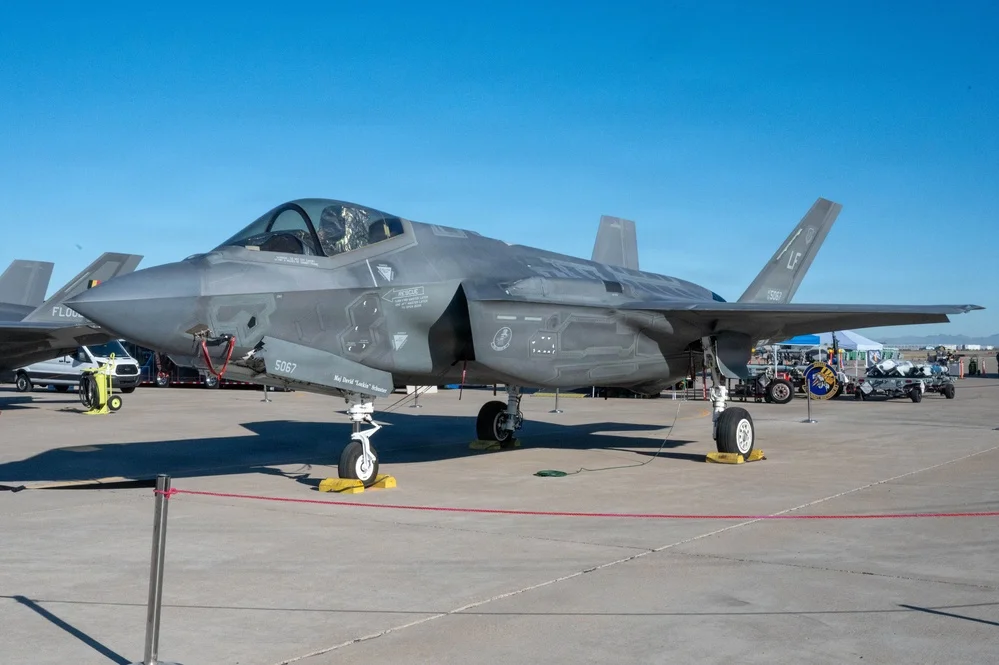
Secretary of State Marco Rubio’s repeated line in Athens that “the sale cannot go ahead” until Turkey meets US conditions shows where the CAATSA talks in Washington currently stand, even as Turkish officials say a resolution is close.
US Secretary of State Marco Rubio has reaffirmed that Washington’s legal conditions for transferring F-35 jets to Turkey remain unmet. In an interview with the Greek daily Kathimerini published on October 8 during his visit to Athens, Rubio said plainly: “Until those conditions are met, the sale cannot go ahead.” The remark resurfaced this week as Turkish officials pressed their case in Washington.
Rubio said President Trump wants the delivery to proceed if it legally can, but stressed that the matter is bound by statute rather than executive discretion alone. Restrictions tied to the Countering America’s Adversaries Through Sanctions Act (CAATSA) and the National Defense Authorization Act (NDAA) still apply. He added that “various options” for a resolution exist, though none has been finalized.
The dispute traces back to 2017, when Turkey signed a roughly $2.5 billion deal to buy Russian S-400 air defense systems. Washington argued the system was incompatible with NATO networks and could expose F-35 data to Russian intelligence, and removed Turkey from the program in 2019. CAATSA sanctions followed in 2020. The first six F-35s Turkey had already paid for have sat in US storage ever since.
At the NATO summit in Ankara in July, Trump said he was weighing whether Turkey could return to the program, a comment that raised expectations in Ankara of faster movement. Foreign Minister Hakan Fidan said in late September that talks on lifting CAATSA sanctions involved what he called “creative ideas,” without elaborating on specifics.
Deputy Defense Minister Alpaslan Kavaklıoğlu, following his own talks in Washington, told CNN the process is moving. “There are some ongoing US issues, such as CAATSA. There is intensive work being done on these,” he said, adding that he expects the outstanding problems to be resolved in the near term. The talks reportedly cover both the status of the six stored jets and the broader sanctions question.
A separate thread concerns the S-400 systems themselves. In late September, Kremlin spokesman Dmitry Peskov said discussions were underway about relocating the S-400s to a third country, and Foreign Minister Sergey Lavrov said Moscow could approve such a transfer if the recipient maintains friendly ties with Russia and takes over the system’s upkeep. Analysts see a possible link between that option and the “creative” formula Washington has referenced, though no formal step has followed.
Rubio also addressed Turkey-Greece relations, calling a conflict between the two NATO allies something the US “could never allow to happen.” He said Greece’s request for additional weapons for its own F-35 fleet remains under review, with the final call resting with the Trump administration. Greece’s order for 20 F-35s is due to begin deliveries in late 2028, a timeline that could eventually overlap with any resumed deliveries to Turkey.
Ankara’s broader air power planning is not waiting on the F-35 outcome alone. Turkey has already signed its first serial-production contract for the KAAN fifth-generation fighter, with deliveries planned between 2028 and 2030, giving the air force a parallel path regardless of how the US talks conclude. Layered air defense contracts under the Steel Dome program are similarly expanding domestic production at ASELSAN and Roketsan across short, medium and long-range systems.
That makes the F-35 question less a single procurement dispute than a marker of how CAATSA will be applied going forward within the alliance. Congressional resistance to readmitting Turkey before the S-400 issue is resolved underscores the gap between the administration’s stated intent and the legal framework still in place.
The stakes extend beyond the six paid-for jets. Lifting CAATSA could also ease indirect restrictions affecting ASELSAN, Turkish Aerospace and Roketsan in their dealings with third-country partners and supply chains, which is why Ankara frames the issue as tied to its broader defense-export access rather than the F-35 delivery alone.
One practical complication is engine supply for KAAN itself. The jet’s initial production batch flies on the US-made GE F110 engine, with the indigenous TF35000 not expected before the early 2030s. Keeping engine and spare-parts supply steady during that window is a reason Ankara wants CAATSA-related uncertainty minimized sooner rather than later.
Neither side has published a timeline. Rubio’s comments confirm the legal groundwork is still incomplete, while Kavaklıoğlu’s remarks suggest active negotiations and a Turkish expectation of a near-term outcome. The next concrete marker would be a formal resolution package submitted to Congress.
Sources
- Hürriyet Daily News, “Rubio says Trump wants F-35 deliveries to Türkiye”, October 9, 2026 — used for Rubio’s direct quotes from the Kathimerini interview and his remarks on Turkey-Greece tensions. Read
- Euronews Türkçe, “Rubio: Türkiye’nin F-35 alımı S-400 meselesi çözülmeden mümkün değil”, October 8, 2026 — used for the interview date, S-400/CAATSA background and Greece’s F-35 delivery timeline. Read
- The Defense Post, “US Reaffirms Conditions for Turkey’s F-35 Jet Transfer”, October 14, 2026 — used for Kavaklıoğlu’s CNN quotes and the detail on the six stored jets. Read