Maintenance and Lifecycle Support from Türkiye: What Operators Get After Delivery
Maintenance and Lifecycle Support from Türkiye: What Operators Get After Delivery
Defence platforms spend roughly 5 percent of their lifecycle being purchased and 95 percent being maintained. The supplier who wins the procurement contest but loses the sustainment contest produces hangar queens. Türkiye has built a sustainment architecture that scales with its export base — and it is one of the reasons buyers come back.
The Sustainment Stack
A modern defence platform requires four sustainment layers throughout its 25-40 year operational life:
- Operator-level maintenance: Daily and pre-mission checks, basic repairs.
- Field-level (intermediate) maintenance: Component swap-outs, scheduled servicing.
- Depot-level maintenance: Major overhauls, deep repairs, mid-life upgrades.
- Configuration management and modernisation: Software updates, hardware refresh, integration of new munitions or sensors.
Turkish industry now offers all four layers for major export platforms — and is willing to locate depot-level capability in the buyer’s country where the order volume justifies the investment.
Spare Parts — The Boring But Critical Element
The most common reason export platforms become unavailable is not combat damage — it is spares shortage. Western platforms in Saudi Arabia, Egypt and Iraq have all experienced extended availability gaps when the supplier’s spare-parts pipeline was disrupted by political decisions or supply-chain failure.
Türkiye’s offer to export buyers includes:
- Defined spare-parts pricing locked in the original contract.
- In-country spare-parts depot for major platforms.
- Production line continuity guarantee (Türkiye produces for its own armed forces, ensuring the line stays warm).
- Re-manufacturing rights for selected components in the buyer’s country.
Mid-Life Upgrades — Where Long-Term Value Lives
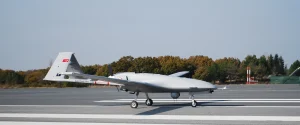
A TB2 delivered today will receive software and sensor upgrades for decades. Türkiye’s product roadmap publishes block upgrades on a transparent schedule. Buyers who joined the TB2 ecosystem in 2019-2020 have now received multiple block upgrades — sensor packages, munition compatibility (MAM-T introduced 2021), self-defence improvements.
The same model applies to Atmaca, HİSAR / SİPER, Altay and the rest of the catalogue. Buyers buy into a roadmap, not a snapshot.
Software And Cybersecurity Sustainment
Modern defence platforms are software-defined. The cybersecurity posture of a platform depends on patch cadence, vulnerability management and configuration control — all of which require ongoing supplier engagement. Türkiye’s software sustainment for export platforms is delivered through ASELSAN, HAVELSAN and the platform-OEM software teams, with classified channels available for cleared buyers.
What Buyers Should Negotiate
- Performance-based logistics (PBL) options: Pay for availability, not just for parts.
- In-country technical representatives: Resident supplier engineers, written into the contract.
- Configuration management transparency: Receive the platform configuration baseline and approval rights for changes.
- End-of-life and disposal: Plan for the platform’s eventual retirement now — including software de-licensing and ammunition disposal.
The Bottom Line
Turkish industry sells with sustainment, not before it. Buyers who treat sustainment as the central contract dimension — and not an afterthought — get platforms that fly, sail and shoot decades after delivery. Buyers who skim the sustainment annex get expensive monuments.