Pentagon’s 1260H list jumps to 188 firms, China retaliates on 22 June: the supply-chain war escalates

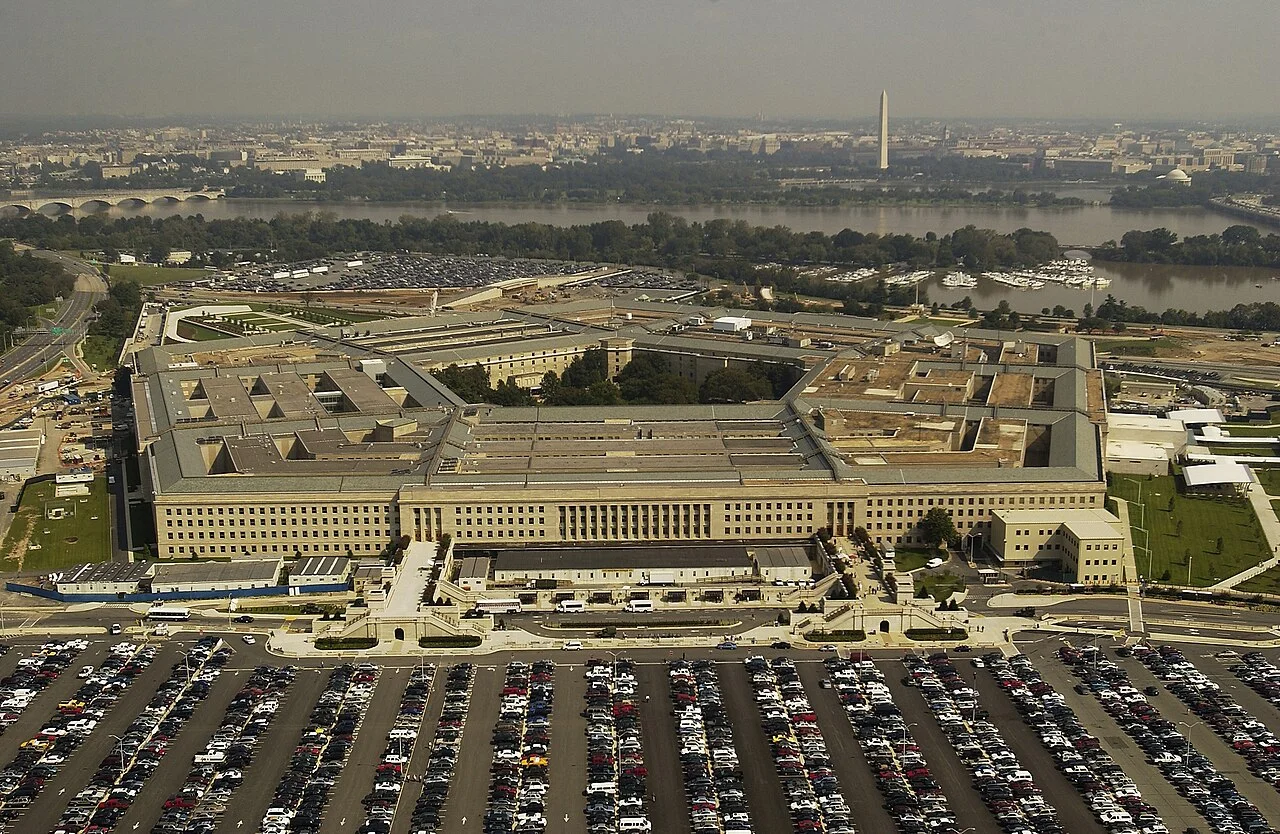
After the U.S. Department of Defense expanded its “Chinese military companies” list from 134 firms to 188 on 8 June 2026, Beijing responded on 22 June by placing ten U.S. firms on its export-control list and excluding 46 from public procurement. The steps the two capitals have taken over the past two weeks point to an escalating contest aimed directly at the supply chain that forms the defense industry’s invisible backbone. Yet the legal weight of these lists is less clear-cut than it seems; the real determining lever is the rare-earth and critical-mineral card both sides hold.
The list, known as 1260H, rests on Section 1260H of the U.S. Fiscal Year 2021 National Defense Authorization Act (NDAA). It requires the Department of Defense to publish annually the companies it assesses as linked to the People’s Liberation Army or as contributing to China’s “military-civil fusion” strategy. This year’s update, adding 65 new names, was recorded as the largest expansion in the list’s history. Among the additions are e-commerce giant Alibaba, search and artificial-intelligence company Baidu, electric-vehicle maker BYD, robotics firm Unitree and biotechnology company WuXi AppTec, along with solar firms such as JA Solar and Trina Solar and battery makers such as CALB and EVE Energy.
A two-week escalation timeline
The list’s expansion is not a fresh source of tension on its own; it is the latest link in a long supply-chain contest. In December 2024 China banned exports of gallium, germanium, antimony and superhard materials to the United States, and in April 2025 it placed seven critical medium-to-heavy rare-earth elements—including terbium, dysprosium, samarium and gadolinium, used in high-temperature permanent magnets—under licensing. The most sweeping restrictions, introduced in October 2025 and making every product containing Chinese-origin rare earths subject to a license, were suspended for one year in November 2025; the case-by-case licensing regime from April 2025, however, remained in force.
| Date | Step |
|---|---|
| Dec 2024 | China bans gallium, germanium, antimony exports to the U.S. |
| Apr 2025 | Seven rare-earth elements placed under case-by-case licensing |
| Oct 2025 | Sweeping license requirement on products containing Chinese-origin content |
| Nov 2025 | October restrictions suspended for one year (until 10 Nov 2026) |
| 8 Jun 2026 | Pentagon expands 1260H list from 134 to 188 firms |
| 22 Jun 2026 | China places 10 U.S. firms under export controls, bars 46 from tenders |
| 30 Jun 2026 | 1260H direct contracting ban to take effect |
The list is not a sanction: the reach and limits of 1260H
Being on the 1260H list does not, by itself, create a commercial ban. The critical distinction lawyers emphasize is this: the list is not a Treasury Department sanction. It does not halt commercial transactions between private U.S. companies and the listed firms, impose asset freezes, apply export controls or place investment restrictions. The only thing it does is prevent the Department of Defense from procuring from these firms.
The timing of that bar is also phased. Under Section 805 of the FY2024 NDAA, the direct contracting ban takes effect on 30 June 2026; from that date the Department of Defense may not enter into new contracts with the listed firms or renew existing ones. The indirect procurement ban—that is, the prohibition on acquiring, through third parties, goods and services produced or developed by a listed firm—takes effect a year later, on 30 June 2027. This second phase is the hard one, because weeding out Chinese-origin components in the lower tiers of the supply chain poses a serious visibility problem for defense contractors. The presence of exemptions in the law, such as a “component” carve-out, also points to the gray areas of implementation.
The mechanics of China’s retaliation
Beijing’s 22 June response came on two fronts. The Ministry of Commerce placed ten U.S. firms on its export-control list, banning the sale of Chinese-origin dual-use goods to them. The list was reported to include rare-earth miners MP Materials and USA Rare Earth, unmanned-aircraft makers Teal Drones and Jaia Robotics, along with Aveox, Red Cat Holdings, IMSAR, Ball Aerospace, Oshkosh Defense and the maritime services unit of L3Harris. On the second front, the Ministry of Finance excluded 46 U.S. firms, most of them defense contractors, from public tenders.
The choice of targets is as strategic as it is symbolic. Listing MP Materials and USA Rare Earth strikes at the very heart of America’s effort to build a rare-earth supply chain independent of China; these two firms are seen as the showcase of Washington’s localization plan. Even so, according to Han Shen Lin of The Asia Group, the move is “largely symbolic,” because most of the targeted firms have no meaningful commercial activity in China. In other words, Beijing is prioritizing the sending of a message over real economic harm; it is keeping its true lever, the rare-earth tap, partly open for now.
The real card: rare earths and global dependence
The contest’s center of gravity lies less in the lists than in the critical-mineral supply chain. China controls more than 90 percent of rare-earth processing and the overwhelming share of gallium refining and graphite-anode capacity. These elements are indispensable in the high-temperature-resistant permanent magnets of modern defense platforms, from fighter jets like the F-35 to guided missiles, electric motors and radar systems. According to the International Energy Agency’s assessment, if the suspension set to end in November 2026 is not extended, some $6.5 trillion in annual economic activity outside China could be put at risk.
This picture explains the asymmetry between the 1260H list and China’s retaliation. The tool in Washington’s hand is essentially to close off access to its own defense budget; the tool in Beijing’s hand is to throttle the flow of raw materials that feeds the production lines of both the United States and its allies. The two levers are not equal in weight, and both sides are aware of it; which is why the suspension of the rare-earth restrictions functions as a safety valve preventing the tension from rupturing altogether.
What does it mean for Turkey and NATO?
Even though they are not direct parties, the indirect procurement ban coming into force in phases is of close concern to NATO members and to Turkey. The third-party-chain rule taking effect in 2027 could make it mandatory, in projects where the Turkish defense industry enters as a subcontractor or component supplier to U.S. prime contractors, to trace the Chinese-origin sub-components in use. The origin of a magnet in a motor driver, or of a semiconductor on a board, is turning into a critical variable that determines procurement eligibility.
The second risk is on the rare-earth side. A significant share of the permanent magnets and special alloys Turkish defense firms use in electric actuators, optronics and communications systems depends, directly or indirectly, on Chinese processing capacity. If the suspension period in November 2026 is not extended, the cost and lead times of these materials could come under pressure for all suppliers. The supply-chain resilience debates on NATO’s agenda aim precisely at reducing this fragility; yet bringing alternative processing capacity online is assessed as a process that will take years. For Turkey this carries the meaning of both a risk and an incentive to turn toward domestic production of critical materials and magnets.
What comes next?
In the near term, two dates will be decisive. The first is 30 June 2026, the day the 1260H direct contracting ban effectively begins. Listed companies such as Alibaba, Baidu, NIO and WuXi AppTec are reported to have declined to comment and to be able to pursue administrative and legal appeals to be removed from the list; indeed, in the past some firms succeeded in getting off the list this way. The second critical threshold is 10 November 2026, the date China’s one-year suspension of its rare-earth restrictions ends. Whether that period is extended will largely determine whether the contest becomes a manageable rivalry or a sharp rupture. Further out on the horizon, the 2027 indirect procurement ban waits as a pressure point that will accelerate the redesign of defense supply chains worldwide.
Open-source verification notes
- The 1260H list growing from 134 to 188 firms and the main companies added were confirmed by multiple independent sources (TechTimes, WilmerHale, TheNextWeb).
- The fact that 1260H is not a sanction, that it affects only Department of Defense contracts, and that the direct ban takes effect on 30 Jun 2026 while the indirect ban takes effect on 30 Jun 2027, rests on law-firm analyses (Akin, Crowell & Moring, WilmerHale).
- The 22 June retaliation placing 10 firms under export controls and excluding 46 from tenders was confirmed via CNBC, SCMP and The Deep Dive.
- The assessment that the move is “largely symbolic” is attributed to a The Asia Group analyst; it is not an independent finding of fact.
- The rare-earth suspension period (Nov 2025 – 10 Nov 2026) and the $6.5 trillion risk estimate rest, respectively, on law-firm bulletins and the IEA assessment.
Sources
- CNBC — China imposes trade curbs on dozens of U.S. firms in retaliation for Pentagon blacklist (22 Jun 2026)
- South China Morning Post — China adds 10 US firms to export control list, restricts 46 from government procurement
- The Deep Dive — China Hits 56 US Companies With Export Controls and Procurement Bans
- TechTimes — Pentagon Bans Alibaba, Baidu, BYD From Defense Contracts June 30
- WilmerHale / Akin / Crowell & Moring — 1260H list legal analyses
- FDD / Clark Hill — China rare-earth export-control analyses