






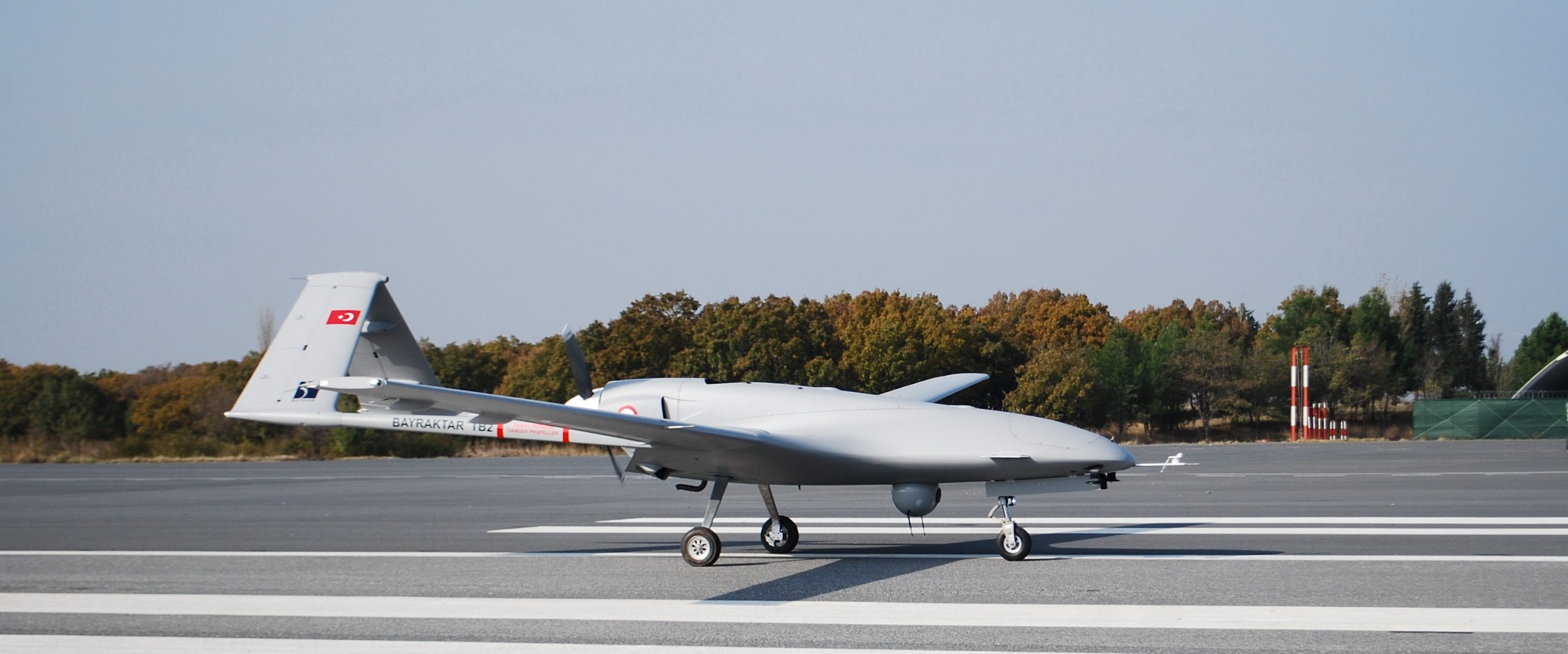
UAV (Unmanned Aerial Vehicle)
What Is a UAV?
A UAV (Unmanned Aerial Vehicle), also called a drone, is an aircraft that flies without a pilot on board. It is either flown remotely by an operator on the ground through a data link, or flies some or all of a mission autonomously using pre-programmed routes and onboard systems. UAVs range from small hand-launched aircraft used for local reconnaissance to large, long-endurance platforms that can carry sensors and weapons over hundreds of kilometers.
Key Specifications: US DoD UAS Groups
| Group 1 | Up to 20 lb, under 1,200 ft altitude, about 100 knots or less |
| Group 2 | 21-55 lb, under 3,500 ft altitude, under 250 knots |
| Group 3 | 55 lb to about 1,320-1,350 lb, any altitude/speed within that class |
| Groups 4-5 | Over about 1,320 lb; Group 4 generally below 18,000 ft, Group 5 typically above 18,000 ft |
Based on the US Department of Defense’s five-tier UAS classification (JP 3-30), as summarized by the Congressional Research Service. Other countries and manufacturers use somewhat different size and role categories, such as MALE (medium-altitude, long-endurance) and HALE (high-altitude, long-endurance).
How It Works
Most military UAVs are flown by a ground control station that sends commands over a radio or satellite data link and receives back video, sensor data and telemetry. Smaller UAVs are often flown within direct line of sight of their operator, while larger, long-endurance UAVs frequently use satellite links so they can be controlled from far beyond visual range, including from a different continent. Many modern UAVs can also fly pre-planned waypoint routes with limited human intervention, with the operator stepping in mainly to make targeting or weapons-release decisions on armed variants.
Roles and Categories
- Reconnaissance and surveillance: the original and still most common UAV role, carrying cameras and other sensors to watch an area or follow a target.
- Armed/combat UAVs (UCAVs): larger platforms, such as the US MQ-9 Reaper or Türkiye’s Bayraktar TB2 and AKINCI, that can carry and release guided munitions.
- Loitering munitions: a related but distinct category of one-way attack drones that carry their own warhead and are expended on the strike.
- Small tactical and consumer-derived drones: inexpensive, often commercially based quadcopters adapted for reconnaissance or, in some conflicts, improvised strike roles.
History and Development
Unmanned, remotely controlled aircraft date back to early 20th-century experiments, but military UAVs became widely useful only once reliable satellite links, lightweight sensors and GPS navigation matured from the 1990s onward. Armed UAVs added a further step change in the 2000s and 2010s, letting a single aircraft perform both long-duration surveillance and precision strikes, and conflicts since then — from counter-insurgency operations to Libya, Nagorno-Karabakh and Ukraine — have shown how both large military-grade UAVs and small, inexpensive drones can be used at scale.
Frequently Asked Questions
What is the difference between a UAV and a drone?
None in practice — “drone” is the informal term most commonly used for the same aircraft that militaries and regulators call a UAV or UAS (unmanned aircraft system).
How are military UAVs classified?
The US Department of Defense uses a five-group system based mainly on weight, altitude and speed, from small Group 1 systems under 20 pounds to large Group 4-5 platforms weighing over roughly 1,320 pounds.
Can UAVs carry weapons?
Yes. Larger UAVs, often called UCAVs (unmanned combat aerial vehicles), can carry and release guided bombs or missiles, while loitering munitions are a separate category of expendable, warhead-carrying drones.
How are UAVs controlled?
Through a ground control station linked by radio or satellite, which can fly the aircraft directly or monitor it as it follows a pre-programmed route, stepping in for key decisions such as weapons release.
What is MALE and HALE?
Medium-Altitude Long-Endurance and High-Altitude Long-Endurance — informal categories for larger UAVs built to stay airborne for many hours at medium or high altitude, used alongside the US military’s own weight-based group system.
Related Glossary Entries
Sources: Congressional Research Service, “Defense Primer: Categories of Uncrewed Aircraft Systems” (Oct. 2024), summarizing US DoD Joint Publication 3-30. Last reviewed: 19 November 2026.