






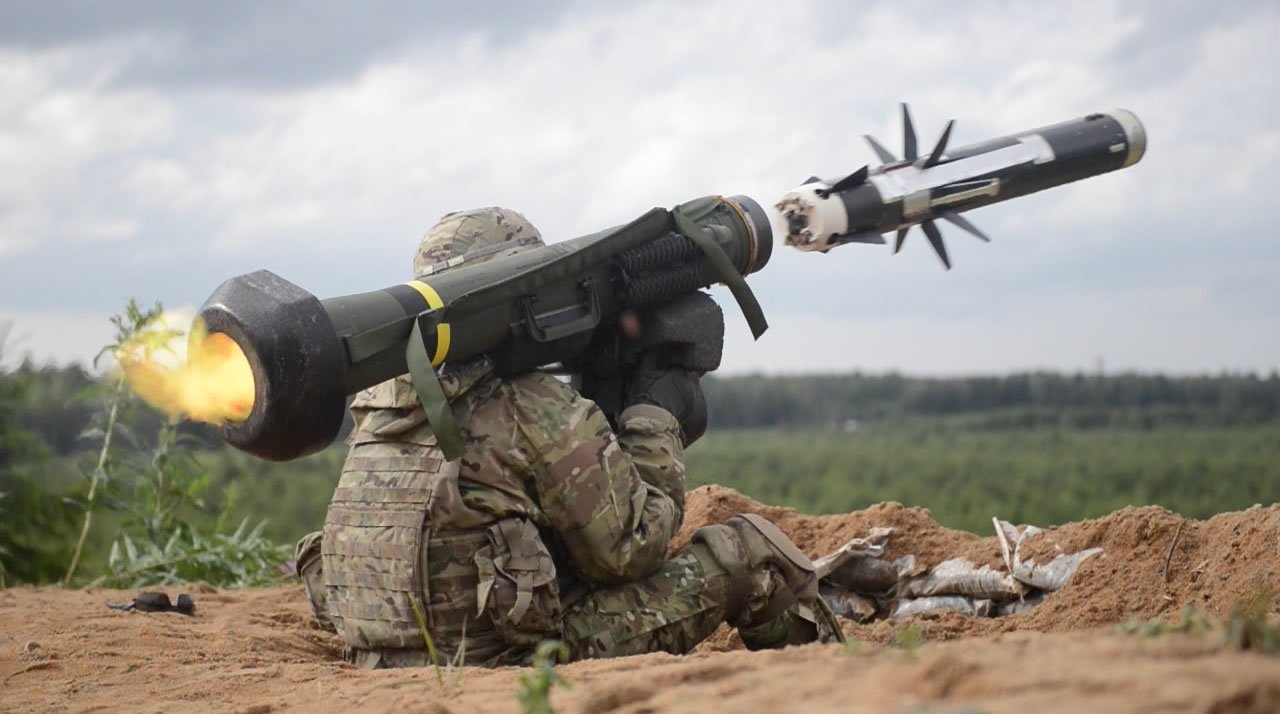
Missile
What Is a Missile?
A missile is a self-propelled, guided munition that steers itself toward a target, in contrast to an unguided rocket or artillery shell, which follows a fixed trajectory once launched. Missiles range from small shoulder-fired anti-tank weapons to intercontinental ballistic missiles, and are classified mainly by launch platform, target type and guidance method.
How Missiles Work
A missile has three core elements: propulsion (a solid-fuel rocket motor, liquid-fuel rocket engine, or air-breathing jet/ramjet for cruise missiles), a guidance system that steers it toward the target, and a warhead. Guidance methods include inertial navigation, satellite navigation (such as GPS), radar homing (active, semi-active or passive), infrared homing, and command guidance from the launch platform. Many long-range missiles combine several of these methods in different flight phases, for example using inertial and satellite guidance in mid-course and a radar or infrared seeker for terminal homing. Warheads vary just as widely, from blast-fragmentation charges effective against aircraft and soft targets to shaped-charge and penetrator designs built to defeat armor or hardened structures.
Key Specifications
- By target/role: air-to-air, surface-to-air, anti-ship, anti-tank, ballistic and cruise missiles.
- By flight profile: ballistic (unpowered arc after boost) versus cruise (powered, often low-altitude flight throughout).
- By guidance phase: mid-course guidance (inertial/satellite) and terminal guidance (radar, infrared or laser seeker).
- By range class: short-range (tactical), medium-range, and long-range/strategic systems.
Operators and Variants
Virtually every modern military operates some class of guided missile. Türkiye’s domestic missile programs are led by Roketsan and include the ATMACA anti-ship cruise missile and the air-launched SOM cruise missile, alongside guided air-to-air and air-defense missiles developed with ASELSAN and TÜBİTAK SAGE. Globally, cruise missiles such as the U.S. Tomahawk and ballistic missiles developed by numerous states illustrate the range of the category, from short tactical weapons fired by infantry units to strategic systems launched from submarines, silos or mobile transporter-erector-launchers.
History and Development
The first operational long-range guided missiles were Germany’s V-1 cruise missile and V-2 ballistic missile, both used near the end of the Second World War against targets in Britain and continental Europe. The Cold War drove rapid development of guided air-to-air and surface-to-air missiles, along with intercontinental ballistic missiles carrying nuclear warheads, as both superpowers raced to field ever-longer-range and more accurate systems. From the 1991 Gulf War onward, precision-guided cruise missiles became a standard tool for striking fixed targets with reduced collateral damage, and guidance electronics have continued to shrink in size and cost, extending missile technology to smaller platforms, shorter-range tactical roles and a growing number of countries.
Frequently Asked Questions
What is the difference between a missile and a rocket?
A missile is guided toward its target after launch; an unguided rocket follows a fixed, unadjusted trajectory.
What is the difference between a ballistic and a cruise missile?
A ballistic missile is powered only during an initial boost phase and then follows an arcing, largely unpowered trajectory; a cruise missile is powered throughout most or all of its flight, often at low altitude.
How do missiles find their targets?
Through guidance systems such as inertial navigation, satellite navigation, radar homing, infrared homing, or a combination used across different flight phases.
What are Türkiye’s main missile programs?
Roketsan’s ATMACA anti-ship missile and SOM air-launched cruise missile are among the most prominent domestic programs.
Who uses guided missiles?
Nearly all modern armed forces, across air, land, sea and air-defense roles, from small infantry units up to strategic nuclear forces.
Related Glossary Entries
Sources: General missile-technology references and open-source program descriptions for Roketsan ATMACA and SOM. Last reviewed: 20 November 2026.