Trophy Active Protection System: Technical Specs, Combat Record and Turkish AKKOR Comparison
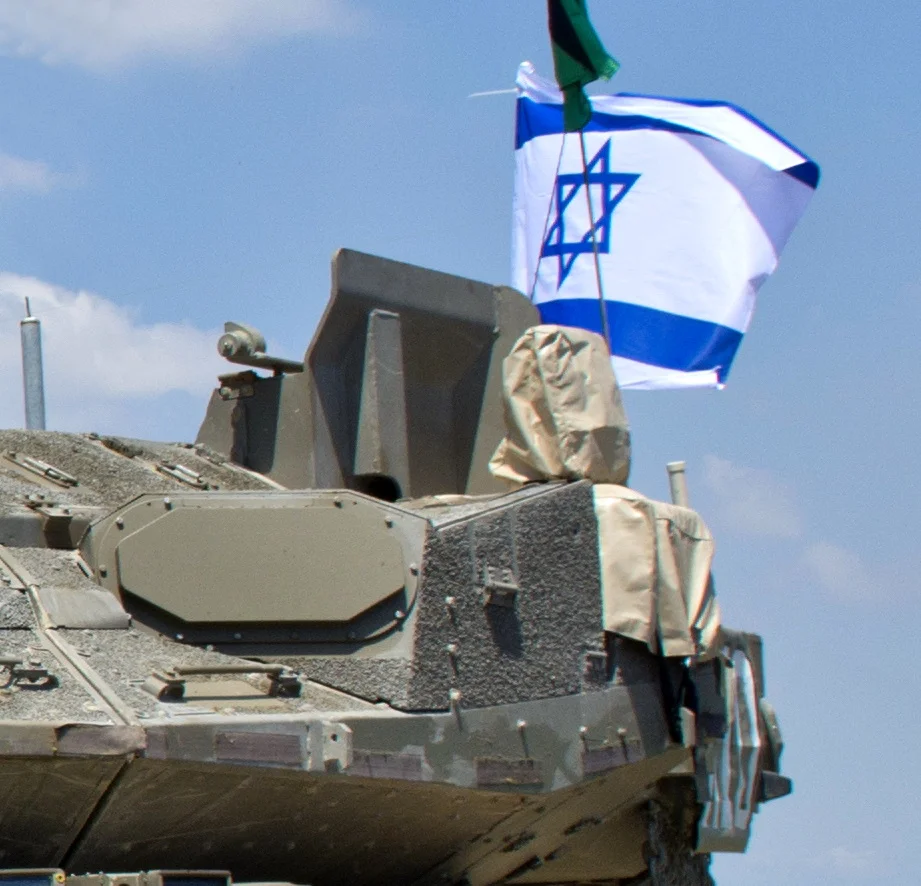
Trophy APS (Hebrew: Meil Ruah; export designation: Windbreaker) is a hard-kill active protection system (APS) developed by Israel’s Rafael Advanced Defense Systems. It detects and intercepts incoming rockets, RPGs, and anti-tank guided missiles in milliseconds before they reach the protected vehicle. First employed in combat in 2011, Trophy has since been integrated onto 16 armored platforms worldwide — including the M1A2 Abrams, Leopard 2A7, and K2 — making it the most widely deployed hard-kill APS in operational service.
Overview
Active protection systems divide into two broad categories: soft-kill systems (which use electronic jamming or laser dazzlers to deflect threats) and hard-kill systems (which physically destroy incoming projectiles). Trophy is hard-kill: it fires a directed fragmentation charge that neutralizes the threat before it reaches the vehicle’s armor.
Trophy’s defining design choice is full 360-degree coverage. Four radar panels scan every direction simultaneously, eliminating the blind-spot problem that plagued earlier APS concepts. The threat does not need to come from a specific direction — whichever radar detects it, the corresponding countermeasure launcher responds.
A second design priority is infantry compatibility. The directed-fragmentation charge is optimized to minimize risk to dismounted soldiers operating around the protected vehicle. While proximity risk for very close personnel is not eliminated, the system is engineered to enable combined-arms operations rather than requiring infantry standoff.
Historical Development
1990s: Following analysis of Israeli armor losses in Lebanon (1982) and subsequent operations, the Israeli Defense Ministry concluded that HEAT-warhead rockets and ATGMs were the dominant threat to Merkava tanks. Rafael began developing an active defeat concept.
2000s: Successive prototype iterations refined the radar, countermeasure mechanism, and decision software. The system was named “Trophy” — an allusion to “capturing” the incoming threat.
2009: Israeli Ministry of Defense approved series production for Merkava Mk 4 integration.
March 2011: First confirmed combat use: a Trophy-equipped Merkava Mk 4 intercepted an RPG fired near southern Gaza. The Israeli Defense Ministry publicly confirmed the event — the first verified hard-kill APS combat intercept in history.
2019: US Army awarded the first Trophy integration contract for M1A2 Abrams, valued at approximately $193 million.
2021: US-Germany Trophy integration operational for M1A2 Abrams deployed with US forces in Germany — the first Trophy deployment on NATO territory.
2024: Germany completed Leopard 2A7 Trophy integration, delivering the first equipped vehicles to the Bundeswehr. South Korea signed an agreement with Hyundai Rotem for K2 integration.
System Components
ELM-2133 WindGuard Radar (×4)
Four AESA radar panels positioned around the vehicle hull provide continuous 360° surveillance. Each panel tracks incoming ballistic objects, calculates velocity, trajectory, and predicted impact point in milliseconds. The multi-panel configuration means no single panel is responsible for a full hemisphere — coverage overlaps, eliminating gaps.
Battle Management Computer
Receives radar tracks and runs ballistic prediction algorithms. Determines whether the incoming object will impact the vehicle or pass harmlessly. Selective engagement prevents false positives (thrown rocks, shell fragments) from triggering countermeasures unnecessarily, conserving the countermeasure magazine.
Directed Fragmentation Countermeasure Launchers
Multiple launchers distributed around the vehicle exterior. On engagement command, the appropriate launcher fires a shaped fragmentation charge toward the incoming threat vector. The charge detonates the threat’s warhead in flight or shreds its body before impact. Fragmentation pattern is directional — concentrated toward the threat axis, minimizing risk to nearby personnel.
Technical Specifications
| Parameter | Value |
|---|---|
| Developer | Rafael Advanced Defense Systems (Israel) |
| Category | Hard-kill Active Protection System |
| In service (Israel) | 2009 |
| First combat use | 2011 |
| Coverage | 360° |
| Radar | 4 × Elta ELM-2133 WindGuard AESA |
| Reaction time | Milliseconds (detection to intercept) |
| Effective threats | RPG, HEAT ATGM (Kornet, TOW, Fagot, RPG-29) |
| Ineffective against | KE penetrators (APFSDS tank rounds) |
| System weight | ~1,000 kg (varies by platform) |
| Platform integrations | 16 (as of 2024) |
| Reload | Automatic between intercepts |
Combat History
2011 — First Hard-Kill APS Combat Intercept in History
In March 2011, a Trophy-equipped Merkava Mk 4 operating near southern Gaza intercepted an RPG in flight. The Israeli Defense Ministry confirmed and publicly disclosed the event. The crew was unharmed; the vehicle sustained no damage. This engagement marked the first confirmed combat use of any hard-kill APS anywhere in the world.
2014 — Operation Protective Edge
During the 50-day Gaza ground operation, Trophy engaged RPG-7, RPG-29, and Kornet ATGM threats across multiple engagements. Israeli sources reported that Trophy prevented serious armor losses. Post-operation analysis was incorporated into subsequent software updates.
2021 — Operation Guardian of the Walls
Ground armor deployment was limited in this operation, but Trophy-equipped vehicles on patrol logged multiple engagement events. System performance data from this period contributed to pre-2023 software refinements.
2023–2024 — Gaza Ground Campaign
The most intensive Trophy operational period on record. Trophy-equipped Merkava Mk 4 tanks and Namer heavy APCs were deployed in Rafah, Khan Yunis, and northern Gaza urban operations. Hamas and Palestinian Islamic Jihad forces employed RPG-29 and Kornet-EM — both within Trophy’s designed threat profile. Israeli military stated that Trophy prevented dozens of crew casualties.
Operational context: Trophy enabled Israeli armored vehicles to operate in dense urban terrain with reduced crew vulnerability to HEAT threats. UN agencies and civil society organizations extensively documented civilian casualties in Gaza throughout the conflict, including in areas traversed by armored columns. Trophy’s role in these events is strictly defensive in nature — protecting vehicle crews rather than engaging external targets — but its contribution to armored maneuver capability in populated areas is part of the broader operational record.
Operator Countries
| Country | Platform | Status |
|---|---|---|
| Israel | Merkava Mk 4, Namer | Standard fit; extensive combat use |
| United States | M1A2 SEPv3 Abrams, M2 Bradley | Operational; Bradley integration ongoing |
| Germany | Leopard 2A7 | First delivery 2024; Bundeswehr operational |
| South Korea | K2 MBT | Agreement signed 2024 via Hyundai Rotem |
| Australia | Redback IFV | Under evaluation (LAND 400) |
| United Kingdom | Challenger 3 | Under review |
Known Contract Values
| Country | Year | Value | Scope |
|---|---|---|---|
| United States | 2019 | ~$193 million | Initial M1A2 Abrams Trophy kits + integration |
| United States | 2021–2024 | Hundreds of millions (addl.) | Expanded fleet integration |
| Germany | 2022–2024 | Classified | Included in Leopard 2A7 modernization package |
| South Korea | 2024 | Not disclosed | K2 integration via Hyundai Rotem |
Advantages
- Proven hard-kill intercept record: Only APS with a decade-plus continuous combat data set — directly validated through live engagements.
- Full 360° protection: No blind sectors; any threat from any direction triggers the appropriate countermeasure.
- Infantry-compatible operation: Directed fragmentation design reduces but does not eliminate risk to nearby dismounts; enables combined-arms deployment.
- Multi-platform ecosystem: 16 integrated platforms spanning MBTs, IFVs, and heavy APCs.
- Automatic reload between engagements: Capable of sequential intercepts against rapid follow-on threats.
- NATO alliance integration: US and German adoption anchors Trophy as the alliance’s emerging APS standard.
Disadvantages
- Ineffective against KE penetrators: APFSDS rounds from tank guns cannot be intercepted; passive armor or ERA remains the solution for that threat category.
- Close-proximity infantry risk: Fragmentation dispersion, even when directed, poses injury risk to personnel within several meters of the vehicle at intercept time.
- Weight: ~1,000 kg adds significant load to lighter armored vehicles; limits application to lighter platforms.
- Simultaneous-sector attack vulnerability: Multiple ATGMs arriving in the same sector within milliseconds could theoretically overwhelm single-sector capacity — though practical execution of such an attack is extremely difficult.
- Israeli export approval requirement: Political dependency on Israeli government licensing; demonstrated vulnerability to geopolitical disruption.
Competing Systems
| System | Country / Maker | Category | Key Difference |
|---|---|---|---|
| Iron Fist | Israel / Elbit | Hard-kill | EFP-type countermeasure; fitted on Namer; limited export |
| Arena-M | Russia / KB Mashina | Hard-kill | T-90M; older architecture; limited verified combat data |
| Shtora-1 | Russia / Foton | Soft-kill | Laser jamming only; ineffective vs. fiber-optic guided ATGM |
| AMAP-ADS | Germany / ADS GmbH | Hard-kill | Claims faster reaction; limited operational deployment |
| MUSS | Germany / HENSOLDT | Soft-kill | IR jamming on Puma IFV; not hard-kill |
| AKKOR | Turkey / ASELSAN | Hard-kill | Altay/ACV-15 designed; tests complete; no combat use |
Turkish Counterpart and Comparison: AKKOR
ASELSAN’s AKKOR (Aktif Korunma Sistemi) is Turkey’s domestic hard-kill APS, developed primarily for the Altay MBT and ACV-15 IFV. It shares the same architectural approach as Trophy: radar-based threat detection, ballistic prediction software, and a directed-fragmentation countermeasure. Testing was reported completed in 2023–2024.
| Attribute | Trophy | AKKOR |
|---|---|---|
| Developer | Rafael (Israel) | ASELSAN (Turkey) |
| Category | Hard-kill | Hard-kill |
| In service | 2009 (Israel) | Tests complete; serial production pending Altay fielding |
| Coverage | 360° | 360° (design goal) |
| Combat data | Extensive since 2011 | None |
| Platform integrations | 16 (M1, Leopard 2, K2…) | Altay, ACV-15 (planned) |
| Export customers | USA, Germany, South Korea | None yet |
| KE protection | None (same limitation) | None (same limitation) |
Envanter Medya Analysis
Trophy represents a fundamental shift in tank survivability doctrine. Before it, the answer to HEAT threats was thicker armor or reactive armor add-ons — both of which impose weight and volume penalties that compound across a fleet. Trophy offers a different trade: intercept the threat before it reaches the armor, and preserve the mobility advantages of a lighter base platform. That logic has now been validated in more combat engagements than any comparable system.
The Gaza context requires careful separation of what Trophy does and what it enables. As a defensive system, Trophy protects crews — it does not fire at external targets. However, a tank crew protected by Trophy can operate in terrain and proximity it could not safely enter without it. Whether that expanded operational envelope was used appropriately within the laws of armed conflict in Gaza is a question that has been raised by multiple human rights organizations; Trophy’s technical function is distinct from, but not operationally separable from, the broader conduct of operations it supported.
For Turkey: AKKOR is a technically credible program on the right architectural path. The gap is operational validation data — the years of continuous real-world feedback that have shaped Trophy’s software thresholds, false-positive rates, and countermeasure timing. That gap closes only through deployment, not through further testing. Altay’s fielding will be the enabling event. When AKKOR logs its first real intercepts, the competitive comparison with Trophy will move from specification tables to performance records.