Spike LR2 Anti-Tank Missile: Technical Specs, Combat Record, Export Markets and Turkish Alternatives
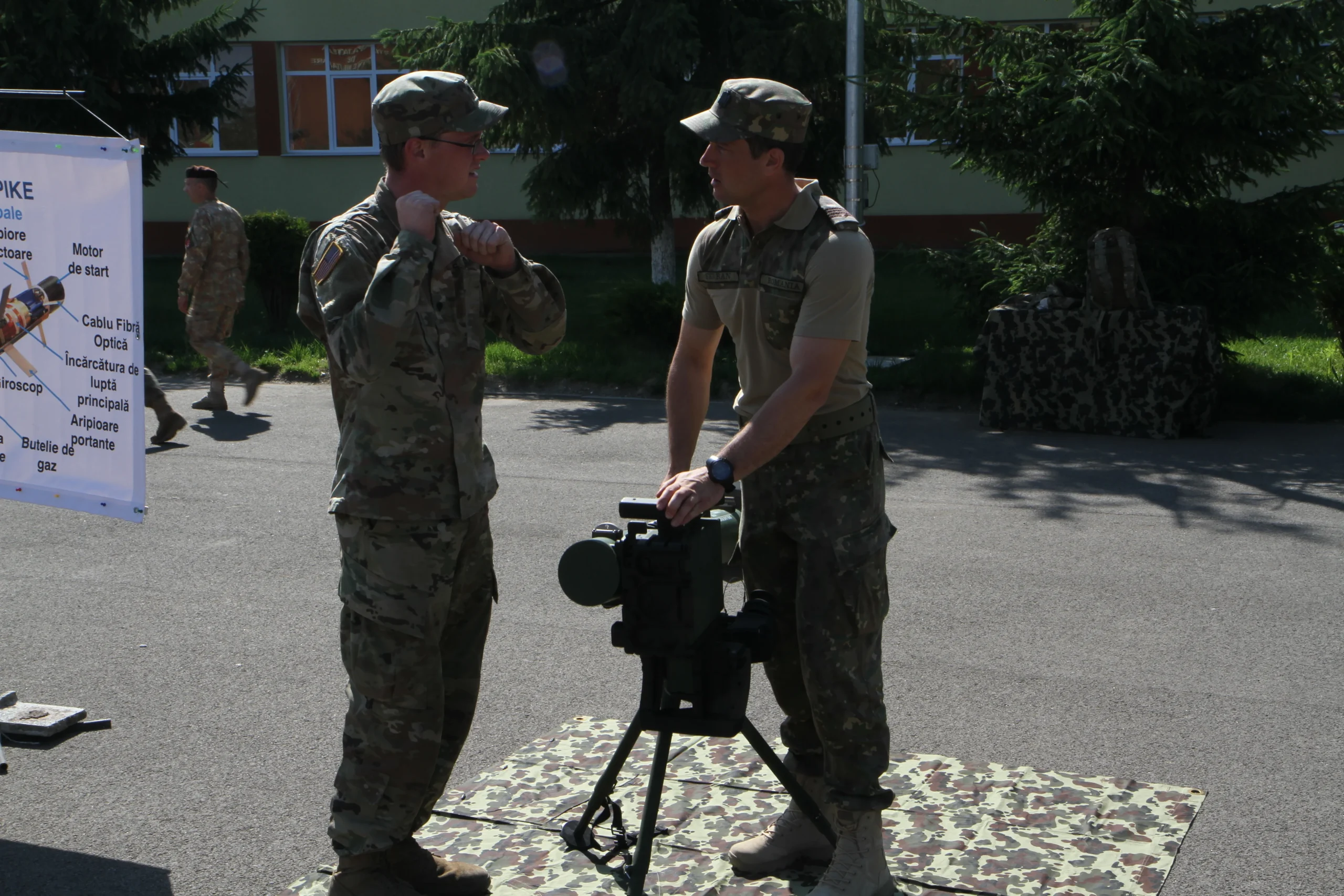
Spike LR2 is the extended long-range variant of the Spike anti-tank guided missile (ATGM) family developed by Israel’s Rafael Advanced Defense Systems. With a 5,500-metre engagement range, dual fiber-optic and RF guidance, and the ability to fire from ground tripods, armored vehicles, helicopters, and tactical UAVs, it has become the de-facto standard ATGM within NATO. As of 2025, more than 46 countries operate at least one variant of the Spike family.
Overview
The Spike family is designed around a single principle: one operational and training ecosystem across the entire range spectrum, from the 800-metre Spike SR to the 25-kilometre Spike NLOS. LR2 sits in the long-range infantry and vehicle layer, pairing combat-proven IIR guidance with a dual data-link — fiber optic as the primary channel and RF as a fallback in electronically contested environments. This dual-link is LR2’s most significant improvement over its predecessor, the Spike LR.
The man-in-the-loop (MITL) mode is central to Spike LR2’s operational appeal. An operator can redirect, retarget, or abort the missile in flight via the data link. In the context of contemporary rules of engagement — where command accountability for civilian harm is scrutinized — the MITL capability offers a legal and tactical argument for deliberate targeting.
Spike Family Overview
| Variant | Range | Platform | Key Feature |
|---|---|---|---|
| Spike SR | 800 m | Portable | Single-operator; disposable launcher |
| Spike MR | 2,500 m | Portable / vehicle | Fire-and-forget; wide use by light infantry |
| Spike LR | 4,000 m | Portable / vehicle / helo | Fiber optic; MITL; NATO standard |
| Spike LR2 | 5,500 m | Portable / vehicle / helo / UAV | Fiber optic + RF dual-mode; UAV integration |
| Spike ER | 8,000 m | Vehicle / helicopter | Heavy warhead; vehicle/helo platforms |
| Spike NLOS | 25,000 m | Vehicle / UAV | Beyond-line-of-sight; large vehicle required |
| Spike Firefly | 1,500 m | Handheld / UAV | Loitering munition |
Technical Specifications — Spike LR2
| Parameter | Value |
|---|---|
| Developer | Rafael Advanced Defense Systems (Israel) |
| Type | Anti-tank guided missile (ATGM) |
| Range | 400 – 5,500 m |
| Length | ~1.2 m (in launch tube) |
| Diameter | 130 mm |
| Missile weight | ~13 kg |
| Warhead | Tandem HEAT (4.5 kg) or multi-purpose blast-fragmentation |
| Armor penetration | 700+ mm RHA equiv. post-ERA (tandem HEAT) |
| Guidance | IIR sensor + fiber optic (primary) + RF data link (secondary) |
| Engagement modes | Fire-and-Forget / Man-in-the-Loop / Lock-On After Launch (LOAL) |
| Attack profile | Direct or top-attack (against thin upper armor) |
| Platforms | Ground tripod, PUMA IFV, Wiesel, Bradley (US), ACV-15, Apache, Tiger helicopter, tactical UAV |
| Weather capability | All weather, day/night (IIR) |
| Unit cost (est.) | $80,000 – $150,000 |
How It Works
Fire-and-Forget: The operator locks the seeker onto the thermal signature of the target and fires. The IIR seeker autonomously tracks and engages the target; the operator can immediately relocate.
Man-in-the-Loop (MITL): After launch, the missile’s nose camera streams video to the operator via the fiber-optic or RF link. The operator can redirect to a different target, engage a specific vehicle sub-system (e.g., the engine bay rather than the crew compartment), or abort if the situation changes. This mode is operationally significant in urban or mixed-civilian environments where ROE require positive target identification throughout the engagement.
Lock-On After Launch (LOAL): The missile is fired without prior target lock; it climbs to altitude, then the seeker acquires a target mid-flight. Used to engage targets behind terrain features or structures not visible from the firing position.
Top-Attack: Programmed to arc over and impact the vehicle’s thinner upper armor, bypassing ERA panels concentrated on the frontal arc.
Combat History
Lebanon 2006
Israeli ground forces employed Spike LR during the 2006 Lebanon war. Hezbollah’s use of Kornet ATGMs against Israeli Merkava tanks triggered a broader industry-wide debate about active protection systems — directly accelerating development of Rafael’s Trophy APS.
Ukraine (2022–present)
Germany and Lithuania transferred significant quantities of Spike LR and LR2 systems to Ukraine from 2022. Ukrainian forces used them against Russian armored vehicles. Open-source footage documented multiple engagements, providing a real-world data set on effectiveness against T-72/T-80 variants in both open terrain and urban environments.
Gaza Ground Operations (2023–2024)
Israel Defense Forces employed Spike LR2 during the Gaza ground campaign that began in October 2023. The system was used from vehicle-mounted launchers and Apache helicopters. The IDF confirmed that the missile’s camera feed is relayed to command levels for targeting review. UN agencies and independent monitors documented guided missile strikes against buildings and vehicles throughout the conflict. Attribution of specific incidents to individual weapon systems by open-source analysts carries methodological uncertainty due to the complexity of the operating environment.
Operator Countries
| Region | Countries | Variant |
|---|---|---|
| Europe | Germany, Netherlands, Belgium, Poland, Spain, Portugal, Italy, Finland, Norway, Sweden, Romania, Georgia, Croatia, Czech Republic, Estonia, Latvia, Lithuania, United Kingdom | LR / LR2 / NLOS |
| Asia-Pacific | Singapore, India (negotiations), Philippines, South Korea | LR / ER |
| Americas | United States (Spike ER on Stryker), Colombia, Chile, Peru | ER / LR2 |
| Middle East / Caucasus | Israel, Azerbaijan, UAE (reports) | Multiple |
Known Contract Values
| Country | Year | Value | Detail |
|---|---|---|---|
| Germany | 2021–2024 | ~€1 billion | LR2 for PUMA IFV; localized production |
| Poland | 2017–2024 | Est. ~€500 million | LR2 + NLOS fleet |
| United Kingdom | 2021+ | Classified; est. £300–500 million | Future Anti-Tank Guided Weapon (FAATGW) program |
| United States | 2023–2024 | ~$100 million (FMS) | Spike ER for Stryker |
| India | Ongoing | ~$700 million (proposed) | Competing against Nag; outcome pending |
Advantages
- Dual-mode guidance: Fiber-optic + RF ensures engagement continuity in electronically contested environments.
- Man-in-the-loop with abort capability: Operational and legal flexibility that pure fire-and-forget systems cannot provide.
- Broad platform compatibility: From foot soldier tripod to Apache helicopter and tactical UAV — same missile, different delivery.
- European co-production: German and Spanish manufacturing reduces export-delivery dependency and supports NATO interoperability.
- Top-attack mode: Bypasses ERA concentrated on frontal arcs; effective against modern reactive-armor packages.
Disadvantages
- Fiber-optic cable management: Cable snagging in urban terrain, around vehicle wheels, or on debris is a practical failure mode.
- Unit cost: $80,000–$150,000 per missile becomes a significant budget pressure in high-tempo operations.
- Weight and logistics: NLOS and ER variants require dedicated vehicle launchers; LR2 is at the heavier end of portable.
- Export dependency: Israeli government export approval required on every transfer; geopolitical events can delay or block deliveries.
Competing Systems
| System | Country / Maker | Range | Key Difference |
|---|---|---|---|
| FGM-148 Javelin | USA / Raytheon + LM | 2,500 m | Shorter range; fire-and-forget only; lighter; no cable |
| Kornet-EM | Russia / KBP | 10,000 m | Laser guidance; longer range; extensive combat data (Syria, Ukraine) |
| PARS-3LR | Germany / Diehl | 7,000 m | Hellfire-class; helicopter-primary |
| Brimstone 3 | UK / MBDA | 12,000 m (air) | Multi-target; aircraft/UAV-primary; limited ground role |
| OMTAS | Turkey / ROKETSAN | 4,000 m | IIR + fiber optic; vehicle/portable; no RF mode |
| UMTAS | Turkey / ROKETSAN | 8,000 m | IIR + laser; helicopter/UAV; combat-proven via TB2 |
Turkish Counterparts and Comparison
Turkey has developed a competitive ATGM industrial base. ROKETSAN’s OMTAS and UMTAS programs address the Spike LR2 and Spike ER mission profiles respectively.
OMTAS vs. Spike LR2
| Attribute | Spike LR2 | OMTAS |
|---|---|---|
| Range | 5,500 m | 4,000 m |
| Guidance | IIR + fiber optic + RF | IIR + fiber optic |
| RF mode | Yes | No |
| Combat data | Extensive (Ukraine, Gaza) | None yet |
| Export customers | 46+ countries | Negotiations ongoing |
| Platform integration | PUMA, Apache, UAV, tripod | PARS III, ACV-15, tripod |
UMTAS vs. Spike ER
UMTAS matches Spike ER’s 8,000-metre range and features dual guidance (IIR + laser). UMTAS has accumulated genuine combat data via Bayraktar TB2 in Syria, Libya, and Nagorno-Karabakh — a significant credibility advantage in export pitches. The gap is the helicopter integration scope and the absence of RF guidance for electronic warfare resilience.
Envanter Medya Analysis
Spike LR2’s dominance in the European ATGM market is not simply a function of technical performance. It reflects 25 years of ecosystem building: standardized training doctrine, shared spare parts, compatible launchers, and a software update rhythm that keeps the system current without hardware replacement. Buying Spike LR2 is, in many ways, buying into that ecosystem — which is both the system’s greatest commercial strength and its most important strategic dependency for buyers.
The man-in-the-loop capability deserves particular scrutiny in any operational and ethical assessment. The ability to abort or redirect a missile in flight is genuine. Whether that technical capability translates into meaningful civilian protection in high-tempo, high-density operations is a question the conflict in Gaza has brought into sharp relief. Multiple documentation efforts by UN bodies and NGOs have noted the prevalence of guided missile use in populated environments; the attribution of specific weapons systems to specific incidents remains methodologically complex, but the aggregate record has informed several European governments’ export policy reviews.
For Turkey: the ATGM gap relative to Spike LR2 is narrowing but not closed. The missing elements — RF guidance for jamming resistance and a full helicopter/UAV integration ecosystem comparable to Spike’s — are addressable engineering challenges, not fundamental design limitations. UMTAS’s combat-proven TB2 integration already places it ahead of many Western ATGMs in terms of real-world validation. The next decade’s export success will depend on whether ROKETSAN can build the maintenance and training ecosystem that has made Spike a default choice rather than merely a competitive option.