Royal Navy Declares Full Operating Capability for Martlet Missile on Wildcat Helicopters
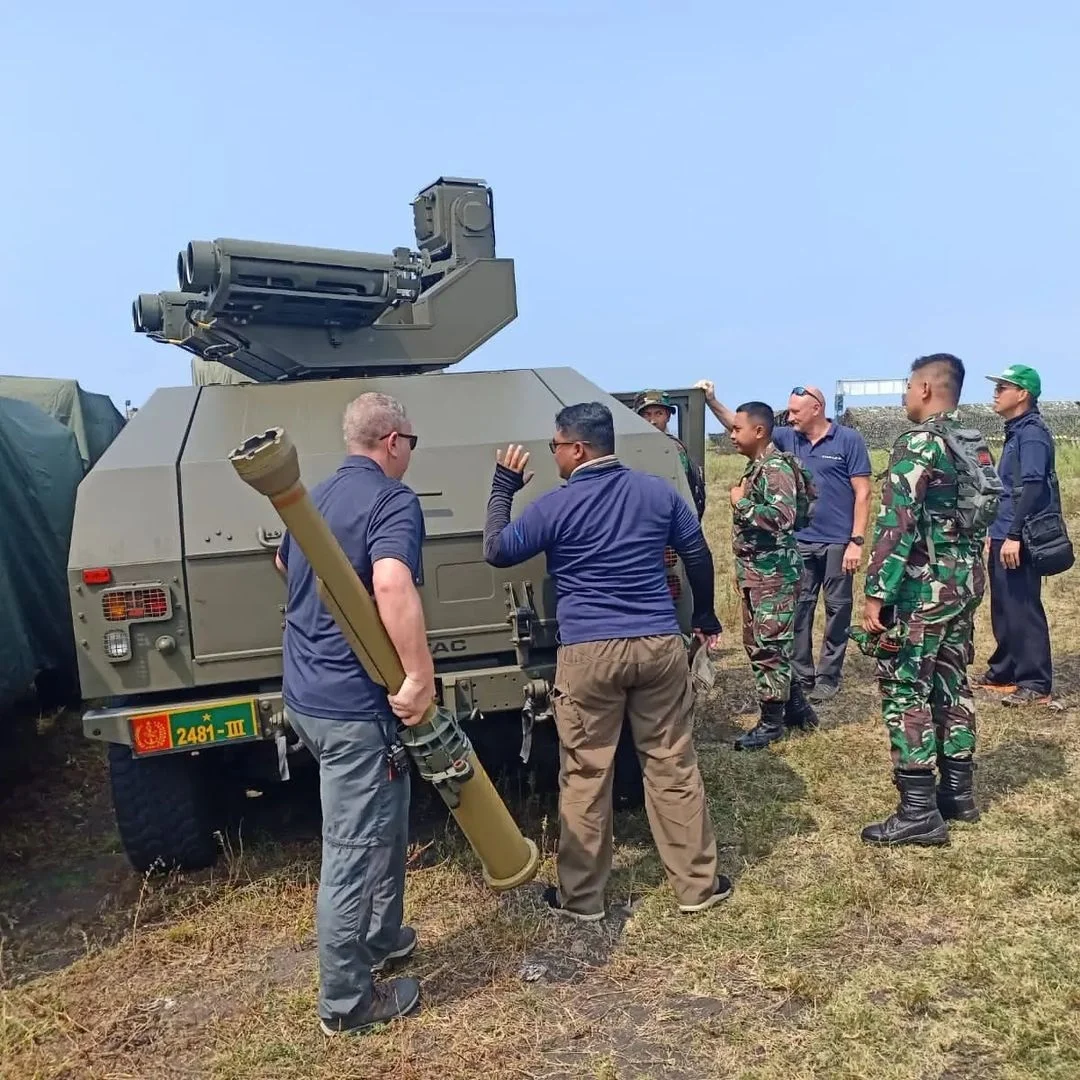
The UK Royal Navy has declared Full Operating Capability for the Thales-built Martlet lightweight multi-role missile on AW159 Wildcat helicopters. The milestone turns the Wildcat into a full-spectrum strike platform against fast attack craft and drone swarms.
According to Defence Industry Europe’s 25 May 2026 report, the Martlet (Lightweight Multirole Missile — LMM) — in Royal Navy service since 2020 — has now reached final operational certification. FOC means system integration is complete and the missile is fully fielded across the fleet.
Martlet operational envelope
Open-source data describe Martlet as a dual-mode (laser beam-riding with optional semi-active laser / IR) lightweight missile in the 13 kg class with a roughly 8 km range. Its small body and low recoil signature make it suitable for helicopters, surface craft, light armoured vehicles and even fixed-wing aircraft. One of the most operationally significant recent updates: launch altitude dropped from 500+ feet down to 50+ feet, dramatically expanding utility in adverse weather and low-altitude prosecution.
The Royal Navy’s published mission set covers:
- Counter-FIAC against fast inshore attack craft (Strait of Hormuz, Red Sea)
- Counter-UAS for low-altitude drones and swarms
- Air-to-ground precision strike
- Defence of UK interests in the Middle East
Cdr Andrew Henderson, who leads the programme, said the system “has transformed the aircraft into a true multi-role strike platform, allowing us to engage and defeat a variety of threats from surface ships to airborne drones with precision and confidence.”
Operational context: lessons from the Strait of Hormuz and the Red Sea
Royal Navy experience facing Iranian Revolutionary Guard fast attack craft in the Strait of Hormuz and Houthi one-way attack drone swarms in the Red Sea exposed the demand for a low-cost, light-weight effector. Heavyweight anti-ship missiles such as Sea Venom and the legacy Sea Skua are over-sized and over-priced for individual Shahed-class drones or single fast attack craft. Martlet plugs that gap with a cost curve a helicopter-class weapon can sustain.
Turkish industry perspective
Türkiye covers a similar capability envelope along several axes:
- UMTAS — long-range anti-tank missile system from ATAK and T929 ATAK-2
- OMTAS — medium-range, platform-agnostic
- L-UMTAS — laser-guided for helicopters and UAVs
- STAMP stabilised remote weapon station for shipboard lightweight defence
Martlet’s FOC on the Wildcat creates a useful benchmark for L-UMTAS performance on Bayraktar TB2, AKINCI and AKSUNGUR. Combined with ASELSAN’s STAMP/SARP family, Türkiye’s market position in the light shipborne — aerial — UAV defence segment is consolidated.
Next steps
The next phase for the Royal Navy is shipboard integration of Martlet on Type 31 frigates and potentially Type 26s. Containerised LMM launchers are already in trial with US Navy and UK ground forces.
Sources
- Defence Industry Europe — “Royal Navy declares full operating capability for Martlet missile system on Wildcat helicopters”, 25 May 2026
- Thales — Lightweight Multirole Missile (Martlet) product page
- UK Royal Navy press release
- Wikipedia — “Thales Lightweight Multirole Missile”
- Roketsan open catalogue (UMTAS, L-UMTAS, OMTAS)