K9 Thunder Self-Propelled Howitzer: Hanwha Aerospace’s World Export Champion 155 mm SPH, Explained
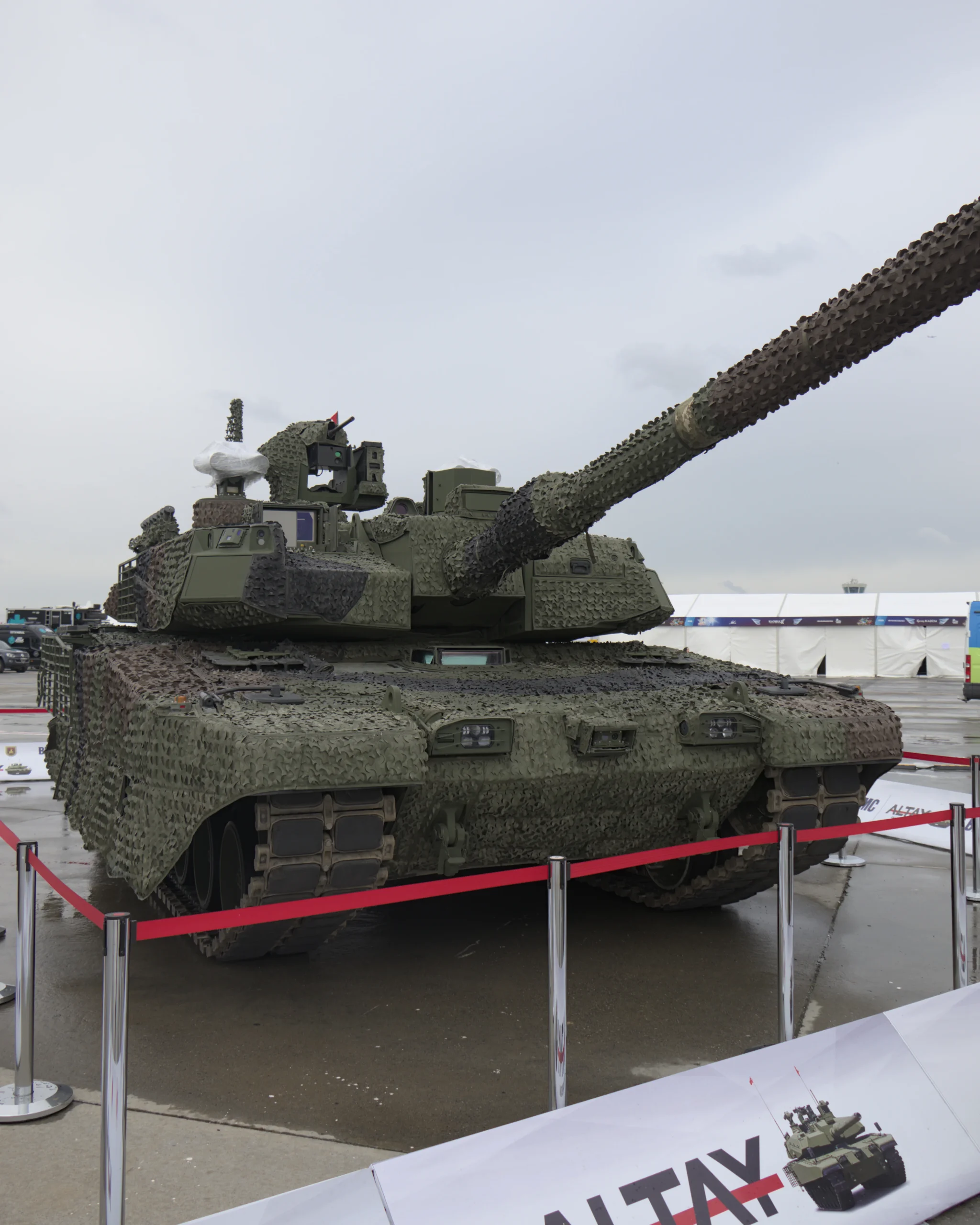
The most-exported modern self-propelled howitzer in the world is South Korea’s K9 Thunder. Built by Hanwha Aerospace, the 47-tonne system serves with 10 countries, with roughly 1,900 units produced and a commanding 52% share of the global modern artillery market. Poland 308, Egypt 200+, India 100+, Norway 24, Finland 48, Australia, Romania, Vietnam and more. But the K9’s most consequential chapter unfolded in Turkey: a 1999 technology transfer to MKE produced 281 T-155 Fırtına units (2004-2015), and Turkey’s defense industry then leveraged that foundation to build the indigenously enhanced Fırtına II and the export-ready truck-mounted Boran 155. We compiled it from open sources.
At a Glance
What Is the K9 Thunder?
The K9 Thunder is a 155 mm 52-cal self-propelled howitzer (SPH) built by South Korea’s Hanwha Aerospace (formerly Samsung Techwin, then Hanwha Techwin). Designed by Korea’s Agency for Defense Development (ADD) starting in 1989 as a modern alternative to the American M109 Paladin, the first unit entered service with the Republic of Korea Army in December 1999.
Three features set the K9 apart from ordinary howitzers: (1) a long 52-cal barrel delivering 41 km (K307 HE) to 54 km (K315 LAP, K9A1) range; (2) burst fire — three rounds in 15 seconds with MRSI (Multiple Rounds Simultaneous Impact: multiple rounds on different ballistic paths landing on the target at the same moment); (3) 87% indigenous content — a flagship of Korean defense industry self-reliance.
What Does It Do?
- Long-range fire support: 41-54 km lets the K9 strike enemy infantry and armor from beyond the front line. MRSI burst capability puts three rounds on one target simultaneously.
- Mobile artillery maneuver: 67 km/h road speed and 360 km operational range allow rapid displacement after firing — critical for counter-battery survival.
- Multi-role gun: HE, APFSDS, laser-guided (Excalibur-compatible) ammunition; planned hypersonic glide projectile for the K9A3.
- K10 ARV companion: The K10 ammunition resupply vehicle on the same chassis carries 104 rounds, keeping the K9 firing continuously without manual reload.
Technical Specifications
| Specification | Value |
|---|---|
| Crew | 5 (K9/K9A1) / 3 (K9A2) |
| Combat Weight | 47 t (K9A1) / 48.5 t (K9A2) |
| Length / Width / Height | 12 m / 3.4 m / 2.73 m |
| Main Gun | Hyundai WIA CN98, 155 mm / 52 cal |
| Ammunition Capacity | 48 rounds (turret bustle 32, hull 16) |
| Rate of Fire | 3 rounds/15 s (burst); 6-8 rds/min (max); 2-3 rds/min (sustained) |
| Range | 41 km (K307 HE) / 54 km (K315 LAP, K9A1) / 60 km (2026 ERM-HE) |
| Engine | MTU MT881Ka-500 (1,000 hp); indigenous STX SMV1000 from 2024 |
| Transmission | Allison X1100-5A3, 4 forward / 2 reverse |
| Max Speed | 67 km/h |
| Operational Range | 360 km |
| Armor | POSCO MIL-12560H steel (domestic) / Bisalloy steel (export) |
| Unit Cost | ~$3 million (2021 ROKA); export packages $6-11 million with modifications |
Why It Matters for Turkey: The T-155 Fırtına Story
The K9 has a special chapter in Turkey. In the late 1990s the Turkish Land Forces were retiring their M52 SPHs. Samsung Techwin pitched the K9 to Ankara in May 1999; an October meeting with the Land Forces Command and a 18 November 1999 bilateral military-defense cooperation agreement followed. A Turkish engineering delegation completed its Korean factory inspection in December.
On 4 May 2000, the Korean Ministry of National Defense and the Turkish Land Forces Command signed an MOU for 350 K9 systems. Prototypes were assembled by the end of 2000 and on 30 December 2000 the platform earned its Turkish name: Fırtına (“Storm”). Winter trials at Sarıkamış (February-March 2001) passed; on 20 July 2001 Samsung Techwin and the Turkish embassy signed the formal contract — 280 units for the army plus 70 export-allocated units, totaling 350 vehicles at a $1 billion budget.
MKE (Machinery and Chemical Industry Corporation) produced 281 T-155 Fırtına units between 2004 and 2015. BMC Defence joined production from 2019. But the story didn’t end there: Turkey leveraged the K9 baseline to build the indigenously enhanced Fırtına II — ASELSAN’s domestic fire control system, ROKETSAN-developed long-range ammunition. Turkey then designed the Boran 155 truck-mounted howitzer — a wheeled mobility configuration the K9 doesn’t offer, taking a fully Turkish export product to global markets.
Today T-155 Fırtına serves with Azerbaijan and played a decisive role in the 2020 Karabakh War. Turkey’s indigenous ammunition development and the Boran 155 export package took what began as a Korean license to a complete, independent Turkish export capability.
Operators and Contracts
| Operator | Quantity / Variant | Year / Value | Status |
|---|---|---|---|
| South Korea | 600+ K9 + K9A1 upgrade | 1999+ | In full service; K9A2 (2027) and K9A3 in development |
| Turkey | 281 T-155 Fırtına (MKE) | 2001 contract; produced 2004-2015; $1B | Domestic upgrade: Fırtına II + Boran 155 export |
| Poland | 212 K9PL + 96 additional | 2022 $2.4B; 2024 PLN 9B | PK9 chassis also used in indigenous AHS Krab |
| Egypt | 200+ K9A1EGY + 355 engines | 2022, 134.8 billion KRW | Local production partnership |
| India | 100 K9 Vajra-T | 2017-2021 | Deployed on the China border (Ladakh) |
| Finland | 48 K9FIN Moukari | 2016+ | NATO integration package |
| Norway | 24 K9 VIDAR | 2017+ | +16 Chunmoo MLRS 2026 follow-on |
| Estonia | 24 | 2018 (used K9) | In service |
| Australia | 30 AS9 Huntsman | 2022, LAND 8116 | Local production line in Geelong |
| Romania | 54 | 2024, ~$1B | With K10 ammunition vehicles |
| Vietnam | ~108 (projected) | 2025, $276M | Contract process |
Total production stood at 1,900 units by 2025. Hanwha Aerospace’s late-2025 backlog of 52.3 trillion won (~$38 billion) represents roughly five years of production visibility.
Variants
- K9: Original production (1999-2018) — 5 crew, 41 km range.
- K9A1 (2018+): Automatic FCS, GPS + INS, APU, thermal imager, fire suppression, 54 km range.
- K9A2 (2027 target): 3 crew, 9-10 rds/min high-rate fire, 60 km range.
- K9A3: Remote-operated, LiDAR, 100+ km range target — drone-artillery concept.
- K10 ARV: Ammunition resupply vehicle, 104-round capacity.
- T-155 Fırtına (Turkey): 281 produced by MKE; Fırtına II and Boran 155 indigenous developments.
- AHS Krab (Poland): PK9 chassis + UK BAE Systems M777 turret; deployed to Ukraine.
- K9 Vajra-T (India): Larsen & Toubro local production, desert/mountain configuration.
- AS9 Huntsman (Australia): NATO-standard, Geelong production line.
- K9FIN Moukari / K9 VIDAR / K9A1EGY: Finland / Norway / Egypt national packages.
Global Counterparts
- M109A7 Paladin (USA): 28 t, 155 mm L39, 30 km. Lighter but shorter range. ~$5.6M.
- PzH 2000 (Germany, KMW): 55 t, 155 mm L52, 30-40 km. Same class as K9 — Germany’s premium product. Deployed to Ukraine. ~$17M (4x the K9).
- CAESAR 8×8 (France, Nexter): 32 t, 155 mm L52, wheeled. Not tracked but similar capability at lower cost. ~$6M.
- RCH-155 (Germany, KMW): Boxer 8×8 with 155 mm. K9’s European wheeled rival.
- 2S35 Koalitsiya-SV (Russia): 55 t, 152 mm L52, autoloader. Russia’s answer but limited production.
K9 vs T-155 Fırtına II: Turkish Side-by-Side
| Criterion | K9A1 Thunder (Korea) | T-155 Fırtına II (Turkey) |
|---|---|---|
| Gun | 155 mm / L52 | 155 mm / L52 (MKE-built) |
| Range | 54 km (K315 LAP) | 40+ km (ROKETSAN long-range round in development) |
| Fire Control | Korean indigenous FCS | ASELSAN indigenous FCS — fully domestic |
| Engine | MTU MT881Ka-500 (German license) / STX SMV1000 | MTU 881 + Turkish drivetrain integration |
| Export Independence | Some Bisalloy steel (Australia) | Turkey’s Boran 155 became an independent Turkish export product |
| Combat Record | Yeonpyeong Island bombardment (2010) | Karabakh War (2020) — decisive use |
Frequently Asked Questions
What’s the difference between the K9 Thunder and the T-155 Fırtına?
Same platform, different paths. The T-155 Fırtına was produced under a 2001 license — 281 units built by MKE in Turkey (2004-2015). Turkey then layered in ASELSAN’s domestic fire control and ROKETSAN’s long-range ammunition development to create the Fırtına II, and built the Boran 155 truck-mounted variant as an independent Turkish export product.
What does a K9 cost?
~$3 million per unit for the Republic of Korea Army (2021 figure). Export packages with local content and modifications run $6-11 million (Poland, Romania contracts).
What’s the K9’s range?
41 km with standard K307 HE, 54 km with the K315 LAP on the K9A1. The 60 km ERM-HE round is expected in 2026; the K9A3 prototype targets 100+ km.
Which countries operate it?
Ten in active service: South Korea (600+), Turkey (281), Poland (308+96), Egypt (200+), India (100), Norway (24+24), Finland (48), Estonia (24), Australia (30), Romania (54), and Vietnam (108 under contract).
What is Poland’s AHS Krab?
Poland’s domestically-produced 155 mm SPH. Chassis is the PK9 (Polish K9 variant); turret is a UK BAE Systems M777-derivative. Deployed to Ukraine. Poland operates both K9PL and AHS Krab.
How did the K9 shape Turkey’s defense industry?
The K9 license — with Samsung Techwin’s free technology transfer — gave Turkey modern SPH production capability. MKE built the manufacturing baseline, BMC joined later. Turkey then leveraged that foundation to develop the Fırtına II (ASELSAN FCS, ROKETSAN ammunition) and the Boran 155 as a fully Turkish export product.
Bottom Line
The K9 Thunder commands the modern SPH export market with a 52% global share. Ten operators, 1,900+ units, a five-year production backlog — the flagship of Korean defense industry. For Turkey the K9 carries a unique meaning: the 2001 license launched the T-155 Fırtına program, and Turkey’s defense industry leveraged that platform to build the indigenously upgraded Fırtına II and the truly independent Boran 155 export product. The triangle of MKE, ASELSAN and ROKETSAN turned a Korean license into a complete Turkish capability — and the Karabakh combat record provides a strong card for Turkey in export markets the K9 now contests.
Related Reading
Sources
- K9 Thunder — Wikipedia (en.wikipedia.org/wiki/K9_Thunder)
- Hanwha Aerospace official corporate page
- National Defense Magazine — South Korea Leverages Industrial Might to Make Arms Market Inroads
- KED Global — Hanwha Aerospace nears $276M K9 howitzer deal with Vietnam (2025)
- Seoul Economic Daily — Korea’s Defense Exports Hit $15.4B in 2025
- Asia Pacific Defence Reporter — South Korea beefs up European defence exports
- SIPRI 2024 Top Arms-Producing Companies report