






Anti-Tank Weapons (ATGMs)
What Is an Anti-Tank Weapon?
An anti-tank weapon is any weapon designed to penetrate or disable armored vehicles, ranging from unguided rocket launchers to precision-guided anti-tank guided missiles (ATGMs). Modern ATGMs combine a shaped-charge or tandem warhead with a guidance system that steers the missile onto a moving armored target, often from a kilometer or more away.
How Anti-Tank Weapons Work
Most anti-armor warheads use a high-explosive anti-tank (HEAT) shaped charge, which focuses explosive energy into a narrow jet capable of burning through steel armor. Because modern tanks carry explosive reactive armor (ERA) and composite armor, many ATGMs use a tandem warhead: a small precursor charge defeats the ERA, and a main charge penetrates the base armor a fraction of a second later. Guidance methods include wire or fiber-optic command links, semi-automatic command to line of sight (SACLOS), and modern “fire-and-forget” infrared seekers that let the gunner move to cover immediately after firing. Many current-generation missiles also attack from a steep top-attack angle, where armor is thinnest. Launch platforms range from a soldier’s shoulder to dedicated anti-tank vehicles and attack helicopters, each trading off missile weight, range and the number of rounds a crew can carry into the field.
Key Specifications
- Warhead types: single HEAT charge, tandem HEAT charge, thermobaric (for fortifications and light structures).
- Guidance: wire-guided, SACLOS, fire-and-forget infrared, laser-guided.
- Launch platforms: shoulder-fired, vehicle-mounted, helicopter-mounted.
- Typical range class: short-range (under 1 km) man-portable systems up to long-range (several km) vehicle- and helicopter-launched systems.
Operators and Variants
Widely fielded ATGMs include the U.S. FGM-148 Javelin, a fire-and-forget top-attack missile; the Swedish-British NLAW; and Russia’s wire- and laser-guided Kornet. Türkiye’s Roketsan produces the man-portable OMTAS and the longer-range, helicopter- and vehicle-launched UMTAS, both using an imaging-infrared seeker developed domestically. ATGMs saw heavy use in the 2022-ongoing Russia-Ukraine war, where Javelin and NLAW shipments were credited with slowing Russian armored advances, and in multiple Middle East conflicts going back to the 1973 Arab-Israeli war. During that conflict, large numbers of early-generation wire-guided ATGMs inflicted heavy losses on tank formations on both sides, a result that pushed armies to invest heavily in both better ATGMs and better armor to defeat them.
History and Development
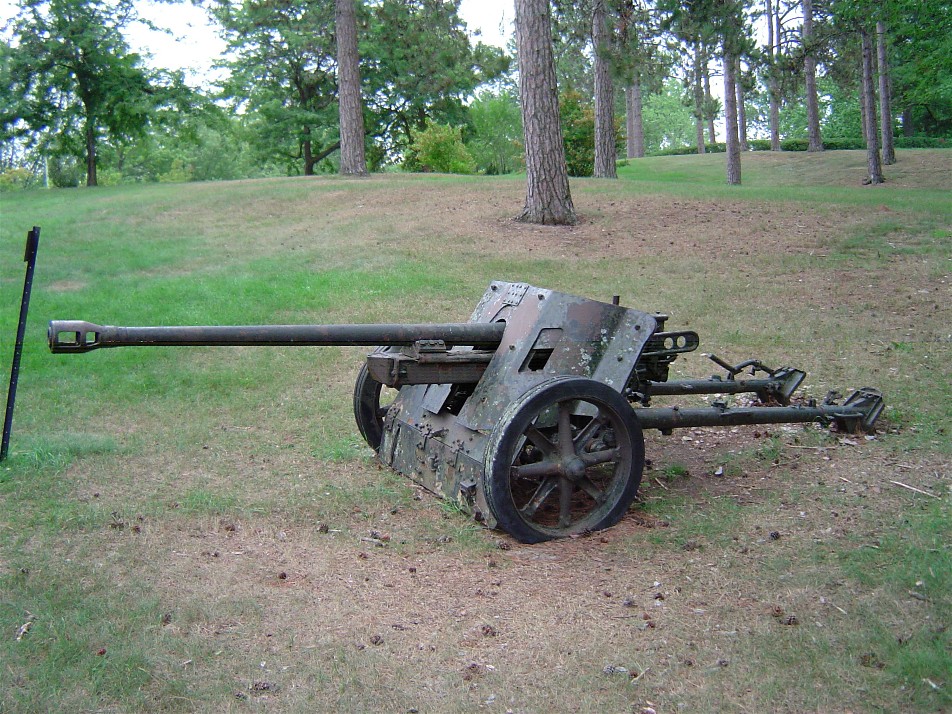
Early man-portable anti-tank weapons, such as the German Panzerfaust and American bazooka of the Second World War, were unguided and effective only at short range. Wire-guided missiles such as the French-German HOT and the American TOW appeared from the 1960s onward, giving infantry and vehicles a stand-off capability against armor well beyond the range of unguided rockets. The move to fire-and-forget seekers, exemplified by the Javelin in the 1990s, let gunners fire and immediately relocate, reducing their exposure to return fire, and top-attack profiles were added to counter increasingly thick frontal armor and reactive-armor packages fitted to later tank generations.
Frequently Asked Questions
What does ATGM stand for?
Anti-Tank Guided Missile.
How do ATGMs defeat modern tank armor?
Mainly with tandem HEAT warheads that first strip away reactive armor and then penetrate the base armor, often attacking from above where armor is thinner.
What is the difference between wire-guided and fire-and-forget missiles?
Wire-guided missiles require the gunner to keep tracking the target until impact; fire-and-forget missiles use an onboard seeker so the gunner can move immediately after launch.
Who uses ATGMs?
Most modern armies, from infantry squads to attack helicopters, field some form of ATGM for anti-armor defense.
What are Türkiye’s main ATGM programs?
Roketsan’s OMTAS (man-portable) and UMTAS (vehicle- and helicopter-launched).
Related Glossary Entries
- FGM-148 Javelin
- UMTAS Anti-Tank Missile
- OMTAS Anti-Tank Missile
- Active Protection System (APS)
- Anti-Tank Guided Missile (ATGM)
Sources: U.S. Army and manufacturer program documentation for Javelin and TOW; Roketsan public program descriptions for UMTAS/OMTAS; open-source reporting on ATGM use in recent conflicts. Last reviewed: 20 November 2026.