






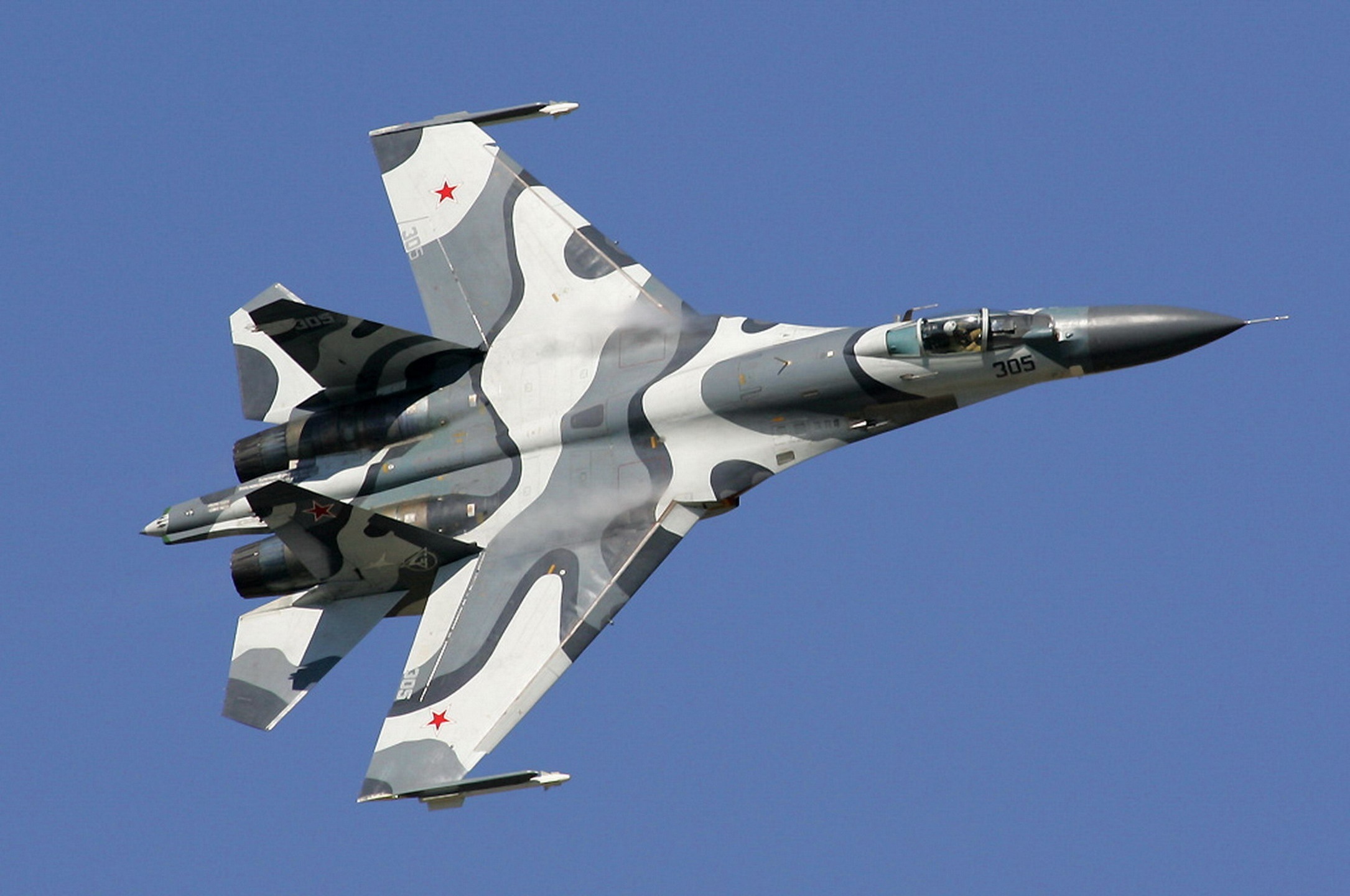
Su-57
What Is the Su-57?
The Su-57 (NATO reporting name “Felon”) is a twin-engine fighter aircraft developed by Sukhoi for the Russian Aerospace Forces. Russia markets it as a fifth-generation multirole combat aircraft combining reduced radar signature with high maneuverability, though independent Western assessments generally place its measured stealth characteristics below those of the U.S. F-22 and F-35.
Key Specifications
| Manufacturer | Sukhoi (part of Russia’s United Aircraft Corporation) |
| Engines | Two AL-41F1 turbofans on current production jets; a more powerful AL-51F1 engine has been in slow-paced development |
| Armament | One 30mm GSh-30-1 cannon; internal bays for air-to-air missiles such as the R-77M and air-to-surface weapons |
| First flight | 29 January 2010, as the T-50 prototype |
| Production (estimated) | Open-source analyst estimates put delivered production airframes at roughly 40-44 by early 2026, a figure Russia has not officially confirmed |
How It Works and Its Role
The Su-57 uses a faceted forward fuselage, internal weapons bays and radar-absorbent materials to reduce its radar cross-section, paired with thrust-vectoring engines that give it a high degree of agility independent of its stealth features. It is designed to carry weapons internally for low-signature missions, or externally when a larger payload matters more than reduced detectability. Russian officials have described a long-term goal of using the Su-57 alongside unmanned “loyal wingman” drones such as the S-70 Okhotnik, though this combined-operations concept remains in early development rather than routine service use.
Operators and Export Status
The Su-57 currently serves only the Russian Aerospace Forces. Russia has pursued export interest for an “Su-57E” version, including talks with India over possible licensed production, but as of 2026 no foreign sale has been finalized; reporting on the India talks has been inconsistent, with some accounts describing active negotiations and others describing the prospect as stalled. Rosoboronexport announced unspecified export agreements at a 2026 defense exhibition without naming a customer or aircraft quantity. The aircraft has seen limited use in Russia’s invasion of Ukraine, reported mainly as stand-off missile launches from inside Russian airspace rather than direct engagement over contested territory.
History and Development
The program began in the 2000s as Russia’s PAK FA (Prospective Aviation Complex for Frontline Aviation) effort, intended as a successor to Soviet-era fourth-generation fighters such as the Su-35S. The T-50 prototype’s first flight came in January 2010, and the aircraft was formally named Su-57 and entered limited service with Russian forces in December 2020. Development of the aircraft’s intended definitive engine, the AL-51F1, has taken longer than originally planned, and most delivered aircraft to date still fly with the earlier AL-41F1 powerplant.
Frequently Asked Questions
What is the Su-57?
It is a twin-engine fighter aircraft developed by Sukhoi for the Russian Aerospace Forces, described by Russia as a fifth-generation stealth fighter.
How does the Su-57’s stealth compare to the F-22 or F-35?
Independent Western analysts generally assess its radar signature as higher than that of the F-22 or F-35, citing surface finish and construction details rather than its basic shaping.
Has the Su-57 been exported?
Not yet confirmed. Russia has discussed a possible export version and held talks with potential customers including India, but no finalized foreign sale had been publicly confirmed as of 2026.
What engine does the Su-57 use?
Production aircraft currently use the AL-41F1 turbofan; a more powerful AL-51F1 engine intended for the type has faced a slower development timeline.
When did the Su-57 enter service?
It entered limited service with the Russian Aerospace Forces in December 2020, a decade after its first flight as the T-50 prototype.
Related Glossary Entries
Sources: Open-source aviation reporting and analyst estimates (production and export status disputed/unconfirmed as noted). Last reviewed: 17 November 2026.