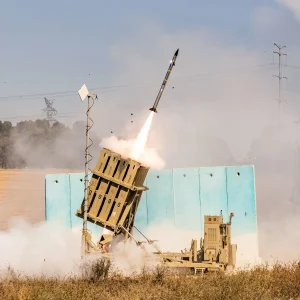
Lockheed Martin Opens Troy, Alabama Line for THAAD and NGI: US Quadruples Strategic Interceptor Output

According to Defense Express (en.defence-ua.com), the new Troy plant was decided on after the United States consumed more than a quarter of its THAAD interceptor stockpile during recent operations connected to Iran. With existing production unable to refill the magazine, the Pentagon decided to quadruple capacity within seven years. As Army Recognition’s industry coverage reports, Lockheed Martin folded the expansion into the NGI contract it received in 2024 as sole supplier, targeting first operational NGI delivery in 2028.
| Location: Troy, Alabama | Plant size: ~8,000 m² (87,000 sq ft) |
| Production lines: THAAD + NGI | Target threat: ICBMs (incl. Sarmat) |
| Output increase: Local x2, national x4 | Funding commitment: $9B through 2030 |
| NGI contract: 2024 (Lockheed Martin sole) | First operational NGI: 2028 |
Background: THAAD Stockpile Burn and the Decision to Quadruple Output
Per Wikipedia’s THAAD technical entry, Terminal High Altitude Area Defense is a US Army system fielded since 2008 to engage short- to intermediate-range ballistic missiles in the upper atmosphere and exo-atmospheric phases through hit-to-kill kinetic interceptors. A typical THAAD battery includes six launchers, 48 interceptors, an AN/TPY-2 X-band radar, and command-and-control units. THAAD deployments in Saudi Arabia, the UAE, Romania, South Korea, and Israel — along with recent operational firing during the 2025-26 Iran operations — have substantially drained the available inventory.

The Plant and the NGI Programme
Open-source assessments indicate the Troy facility is integrated alongside Lockheed Martin’s existing Pike County complex and doubles local interceptor manufacturing capacity. The NGI programme was awarded to Lockheed Martin in 2024 as sole prime after the preceding Northrop Grumman down-select. NGI’s headline advance is its Multi-Object Kill Vehicle (MOKV) architecture: a single interceptor releases multiple independent kill vehicles in space, allowing simultaneous destruction of all warheads released from a single MIRV-equipped ICBM such as the Sarmat or Topol-M.
| Parameter | THAAD (current) | NGI (2028+) |
|---|---|---|
| Target threat | Intermediate BM | ICBM |
| Kill method | Kinetic (single KKV) | MOKV (multi-object kill) |
| Engagement layer | Upper-atmospheric / exo | Exo-atmospheric |
| First fielded | 2008 | 2028 (planned) |
| Prime | Lockheed Martin | Lockheed Martin (sole) |
NATO and Regional Context
NATO’s ballistic-missile defence architecture along the eastern flank already depends on THAAD batteries. The deployment at Romania’s Mihail Kogălniceanu base, together with the Aegis Ashore facility in Poland, forms the alliance’s mid-tier defence against intermediate-range missiles. The US push to refill the THAAD inventory will drive both eastern-flank continuity and Indo-Pacific deterrence against China’s DF-26 and DF-41 class systems. NGI is the most consequential technical step to preserve the strategic balance in the Sarmat era.
Why It Matters for Turkiye
Turkiye meets its in-alliance ballistic-defence requirement domestically through the SIPER programme run by Aselsan and Roketsan. SIPER Block-1 and Block-2 close the long-range air defence layer alongside HISAR-A/O; Block-2 testing has continued successfully through 2026 and the system has now demonstrated its capability against atmospheric ballistic threats at roughly 200 km. After the S-400 decision, Turkiye did not formally return to US-built systems such as Patriot or THAAD; instead, it is extending the indigenous SIPER line in the medium-to-long term into an Aegis-style national ballistic defence architecture. Lockheed Martin’s Troy move shows how tight the global interceptor supply chain has become — and how much strategic value sits with countries that build their own. For Turkiye it amounts to a real-world endorsement of the SIPER investment.
Furthermore, Aselsan’s Çelik Kubbe (Steel Dome) integrated air-and-missile defence concept aligns directly with NGI’s MOKV philosophy: multi-layer, multi-warhead defence under a single command framework. Turkiye’s R&D in this direction will mature in the coming 5-7 years and will open both a national and an export market.
Frequently Asked Questions
What exactly is NGI? Next Generation Interceptor — the new-generation exo-atmospheric missile defence interceptor replacing the existing Ground-Based Interceptor (GBI) family. It targets ICBM threats like the Sarmat and Topol-M.
When will NGI be operational? Lockheed Martin plans first operational NGI delivery in 2028. Full fleet integration extends into the 2030s.
What does the $9 billion budget cover? The total US defence budget allocation through 2030 to quadruple interceptor production — covering THAAD restocking, NGI production, and infrastructure expansion.
What is MOKV? Multi-Object Kill Vehicle — a single interceptor releases multiple independent kill vehicles in space, capable of simultaneously destroying all warheads from a single MIRV-equipped ICBM.
How does Turkiye’s SIPER compare with NGI? SIPER is a strategic mid-range ballistic defence system; NGI is an exo-atmospheric ICBM interceptor. They are not in the same category, but both are critical pillars of a national ballistic defence strategy.
Bottom Line
The Troy plant is a tangible demonstration of the US choosing to break a production-line bottleneck in the ballistic-missile defence race. Replenishing the THAAD inventory burned through in operational use and bringing NGI online against Sarmat are now load-bearing pillars of the strategic balance. Turkiye’s SIPER programme confirms how much advantage sits with nations that field indigenous interceptor capability.
Sources
- Defense Express (en.defence-ua.com): Lockheed Martin Builds New Plant in USA — Production Includes THAAD and Anti-ICBM Missiles, 23 May 2026.
- Army Recognition: U.S. Expands Lockheed Martin THAAD Missile Production to Counter Modern Air Threats, 23 May 2026.
- Wikipedia: Terminal High Altitude Area Defense — system architecture, battery configuration, deployment history.
- U.S. Missile Defense Agency: Next Generation Interceptor (NGI) — official programme page.
- Lockheed Martin press release: NGI sole-source contract award announcement, 2024.