


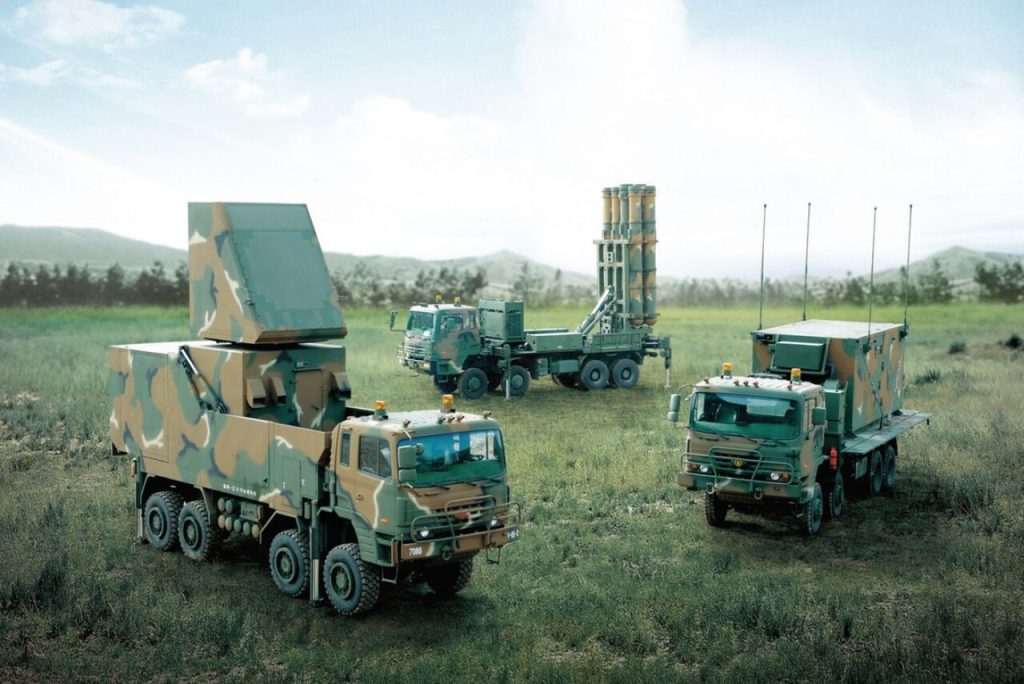
According to Defence Express’s 24 May 2026 report, LIG Nex1’s KM-SAM Block-II — known domestically as Cheongung-II — has positioned itself as the Middle East’s third major medium-range air-defense option behind Patriot and SAMP-T. The system operates at 20-50 km range and 15-40 km altitude, engages both ballistic missiles and aerodynamic targets, and pushes the missile to Mach 5. The region’s buyer roster now extends from the UAE, Saudi Arabia and Iraq into Qatar and Kuwait — a cumulative export envelope of roughly $9 billion since 2022.
At a Glance
- System: KM-SAM Block-II / Cheongung-II — medium-range SAM
- OEM: LIG Nex1, Hanwha Aerospace subsystems (South Korea)
- Range / Altitude: 20-50 km / 15-40 km
- Missile speed: Mach 5
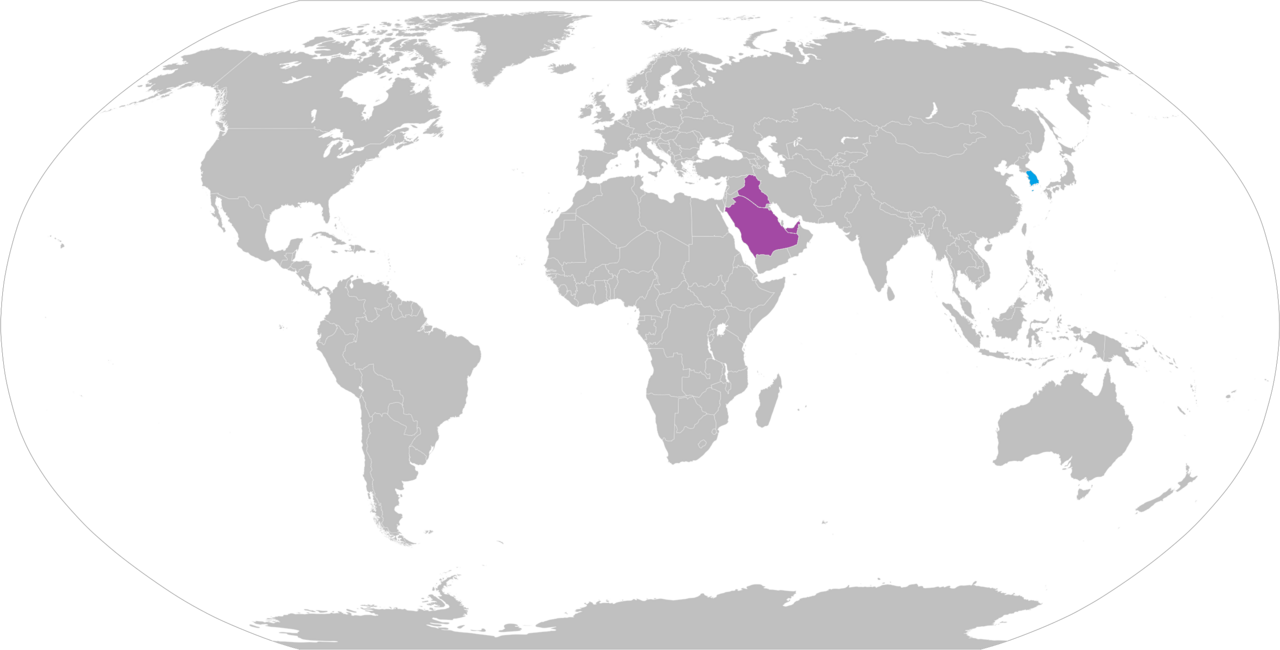
- Confirmed buyers: UAE (Jan 2022, $3.5B) · Saudi Arabia (Feb 2024, $3.2B, 10 batteries) · Iraq (Sept 2024, $2.8B)
- In contract talks: Qatar, Kuwait
- First combat use: March 2026, UAE — 29 of 30 Iranian missiles intercepted
- Denied: Ukraine (repeated requests, “active-conflict” rationale)
Background: Patriot Fatigue and the KM-SAM Rise
Middle East air defense procurement evolved largely around Lockheed Martin’s Patriot PAC-2/3 through the 2010s. The intensifying mix of Houthi and Iranian-origin ballistic and one-way-attack drone threats forced Gulf monarchies to re-examine single-supplier dependence. KM-SAM Block-II entered that opening at roughly half the unit price of Patriot and with a faster delivery curve.
The UAE’s January 2022 $3.5 billion contract was, at the time, South Korea’s largest single weapons export ever. Saudi Arabia followed with a $3.2 billion framework in February 2024 for ten batteries, and Iraq’s Ministry of Defense signed a $2.8 billion package in September 2024. Defence Security Asia confirmed in early 2026 that a March 2026 Iranian ballistic strike on UAE soil saw Cheongung-II intercept 29 of 30 inbound targets — the system’s first real-world combat showcase, after which Qatar and Kuwait negotiations accelerated immediately.

Why Not Ukraine?
Defence Express highlights the striking inconsistency: South Korea has answered every Ukrainian request since 2022 with “domestic regulation prohibits arms transfers to a country in active warfare.” Yet the same system was delivered to the UAE, itself under sustained Houthi/Iranian missile pressure.
Defence Express adds an underreported nuance: KM-SAM Block-II’s technological lineage partly traces to 1990s joint development with Russia’s Almaz-Antey concern — a detail that suggests Seoul’s desire to avoid friction with Moscow lurks under the formal “active-conflict” framing.
Regional Contracts
| Country | Signing | Value | Notes |
|---|---|---|---|
| UAE | Jan 2022 | $3.5 billion | South Korea’s then-largest arms export; combat-tested March 2026 |
| Saudi Arabia | Feb 2024 | $3.2 billion | 10-battery framework |
| Iraq | Sept 2024 | $2.8 billion | Baghdad’s first major non-Patriot SAM purchase |
| Qatar | In talks | Undisclosed | Accelerated after March 2026 UAE combat use |
| Kuwait | In talks | Undisclosed | Iranian threat-driven prioritization |
| Ukraine | Denied | — | “Active conflict” rationale; Russian-tech lineage factor |
Why It Matters for Turkey
The Middle East KM-SAM II surge directly touches Türkiye’s air-defense export segment. In medium-range, Türkiye fields the ASELSAN-ROKETSAN joint HİSAR-A+ and HİSAR-O+ family; in long-range, SİPER Block-I targets engagement envelopes beyond both Patriot and KM-SAM. Türkiye’s edge is not in any single battery but in a layered integrated air defense: HİSAR-A (low), HİSAR-O+ (medium), SİPER (long), KORKUT (point) — a full system architecture rather than the “single-product” Korean play.
The other Turkish lever is technology sovereignty: ASELSAN’s AESA AKR radar, ROKETSAN’s propulsion and warhead stack, and a wholly national software baseline keep the HİSAR / SİPER family end-to-end Turkish. KM-SAM Block-II’s Almaz-Antey lineage and Seoul’s political export friction give the Turkish offer a distinct advantage in client capitals that have seen Korean policy reverse on Ukraine. Within the Gulf, Türkiye can position HİSAR around offsets and technology transfer the way KAAN is being marketed to Indonesia — a model already proving viable.
One more factor: KM-SAM II now has live combat validation. That raises the bar for every competitor. SİPER’s 2026 live-fire tests and KORKUT’s combat record in Syrian operations supply the foundation for Türkiye to clear that same bar.
Frequently Asked Questions
How does KM-SAM II differ from Patriot? KM-SAM II offers comparable ballistic-missile defeat capability at roughly half the unit cost and a shorter delivery cycle. Patriot PAC-3 MSE reaches up to ~160 km; KM-SAM II tops out at 50 km. In mid-intensity saturation engagements, KM-SAM II’s per-battery cost-effectiveness is the key selling point.
Are Cheongung-II and KM-SAM II the same system? Yes. Cheongung-II is the Korean name; KM-SAM Block-II is NATO/export terminology. Single platform.
What is HİSAR-O+’s range? Open-source data lists 25-30 km for HİSAR-O+, extending to ~40 km in HİSAR-RF variants — putting it in direct contest with KM-SAM II’s lower range band rather than its upper one (where SİPER takes over).
Is the Russian-technology claim accurate? Open-source technical reporting confirms that KM-SAM Block-I drew on 1990s joint work with Almaz-Antey, particularly seeker and airframe design. Block-II is heavily localized, but the Seoul-Moscow political optic remains a live discussion point.
Bottom Line
The Middle East KM-SAM II wave is the clearest signal that Patriot’s one-system dominance is over. Seoul’s export selectivity — Gulf yes, Ukraine no — is also a warning to buyers that political logic will shape sustainment logistics in any future crisis. For Türkiye, the window is exactly here: HİSAR and SİPER offer a supplier-independent, sovereign-software, layered alternative to the same client base — and the Indonesia KAAN model has already shown how the Turkish approach can differ at the architectural level.
Related Reading
Sources
- Defence Express — Ukraine Denied KM-SAM II Systems While South Korea Advances Exports (24 May 2026)
- Defence Security Asia — Cheongung-II Destroys 29 of 30 Iranian Missiles in UAE Combat Debut
- Defense News — UAE $3.5B KM-SAM II Contract (Jan 2022)
- Global Defense Corp — Saudi Arabia KM-SAM II $3.2B Deal
- Wikipedia — M-SAM / Cheongung-II technical baseline