
What is the Patriot PAC-3? The U.S. Air Defense Missile That Shields NATO from Ballistic Threats
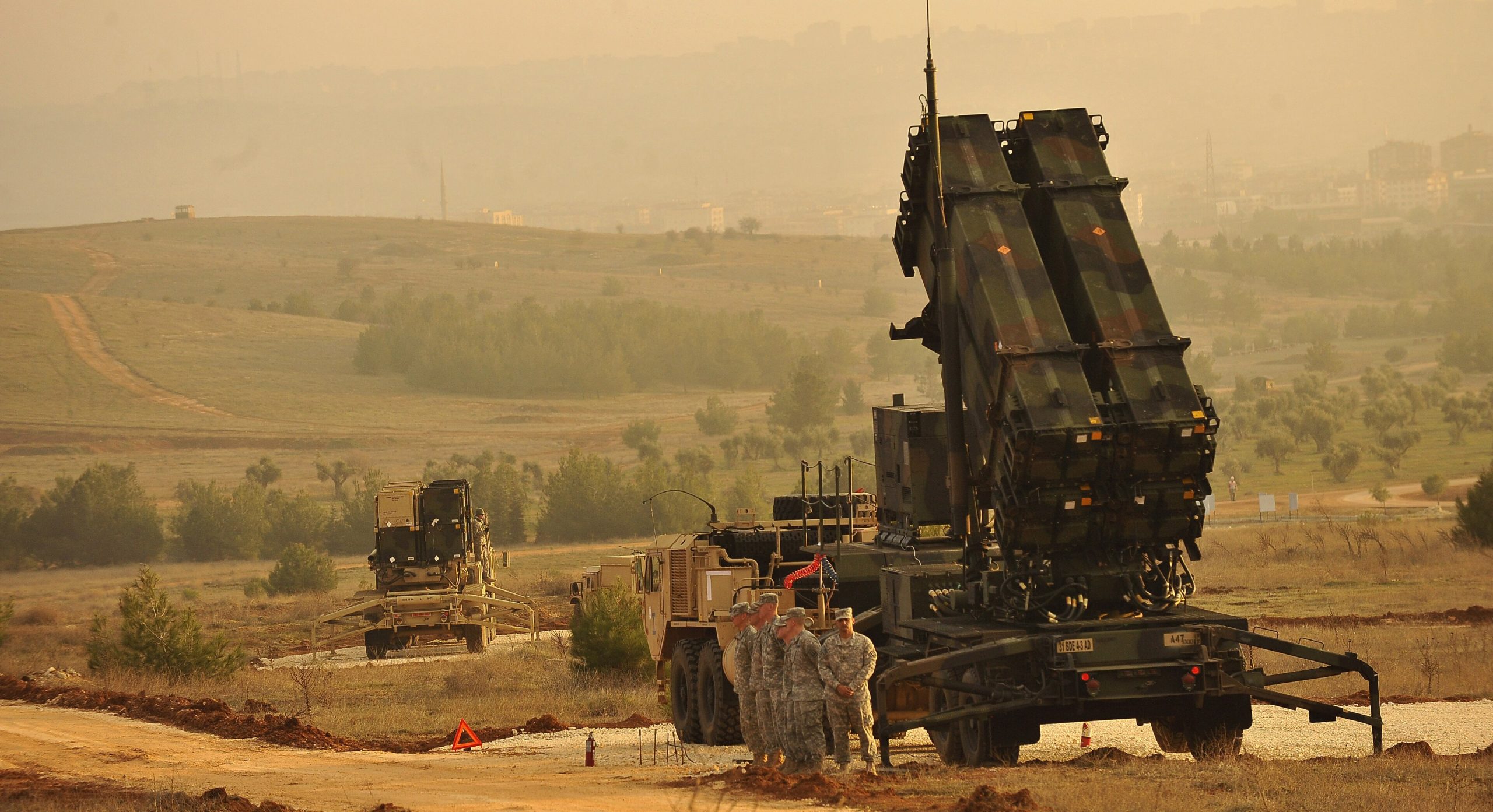
The MIM-104 Patriot — officially the Phased Array Tracking Radar to Intercept on Target — is the United States’ frontline long-range surface-to-air missile (SAM) system and the backbone of NATO’s integrated air and missile defense. Manufactured by Raytheon (RTX) with the PAC-3 interceptor produced by Lockheed Martin, the system has been credited with intercepting Russian-made Kh-101 cruise missiles, Iskander-M ballistic missiles and even a Kh-47M2 Kinzhal hypersonic aeroballistic missile over Kyiv in May 2023 — the first publicly confirmed kill of a hypersonic weapon in combat.

Key facts at a glance
| Attribute | Value |
|---|---|
| Type | Long-range surface-to-air missile system |
| Origin | United States |
| Manufacturer | Raytheon (RTX) — system & PAC-2; Lockheed Martin — PAC-3 interceptor |
| In service | 1981 (Patriot baseline) — present |
| Current interceptor | PAC-3 CRI & PAC-3 MSE |
| Engagement range (PAC-3 MSE) | up to ~120 km (aircraft); ~35 km (ballistic targets) |
| Engagement altitude | 0 – ~25,000 m |
| Maximum speed | Mach 4.1+ (PAC-3 MSE) |
| Guidance | Track-via-missile + Ka-band active radar (hit-to-kill on PAC-3) |
| Warhead | Hit-to-kill kinetic (PAC-3); 90 kg blast-fragmentation (PAC-2) |
| Operators | 18 countries, including the U.S., Germany, Japan, South Korea, Israel, Poland, Sweden, Romania, Saudi Arabia, UAE, Ukraine |
| Unit cost (PAC-3 MSE) | ~ USD 4 million per interceptor |
| Battery cost | ~ USD 1.1 billion (full battery, 2024 pricing) |
From SAM-D to the Gulf War debut
The Patriot program began as SAM-D (Surface-to-Air Missile, Development) in the late 1960s, replacing the aging MIM-14 Nike Hercules and MIM-23 HAWK. The U.S. Army formally accepted the system as Patriot in 1976 and declared initial operating capability in 1984. From the outset, Patriot’s defining innovation was the AN/MPQ-53 phased-array radar, which replaced the multiple mechanically rotating dishes used by HAWK and dramatically reduced reaction time.
Patriot’s combat debut came during Operation Desert Storm (1991), when batteries deployed to Saudi Arabia and Israel engaged Iraqi Al Hussein (modified Scud-B) ballistic missiles. Although early post-war analysis questioned the true kill rate, the engagements established Patriot as the first SAM ever to attempt theater ballistic-missile defense in combat — and triggered a continuous upgrade cycle that defines the system today.
Inside the system: what makes a Patriot battery
A standard Patriot fire unit fields six core elements:
- AN/MPQ-53/65 phased-array radar — performs search, track, identification, and missile guidance in a single antenna. C-band, with more than 5,000 transmit/receive modules in the newest variants.
- AN/MSQ-104 Engagement Control Station (ECS) — the only manned vehicle during an engagement; runs the fire-control software and links to higher echelons.
- M901 / M903 launching stations — wheeled trailers that carry four PAC-2 GEM-T canisters or up to 16 PAC-3 CRI / 12 PAC-3 MSE rounds.
- EPP-III generator — 150 kW prime power for radar and ECS.
- OE-349 antenna mast group — UHF data links to other batteries and to the Patriot Information Coordination Central (ICC).
- PAC-2 GEM-T and PAC-3 interceptors — the missiles themselves.
PAC-2 vs PAC-3: two missiles, one battery
The Patriot battery can mix and match two completely different rounds, optimized for different threats:
| PAC-2 GEM-T | PAC-3 CRI | PAC-3 MSE | |
|---|---|---|---|
| Manufacturer | Raytheon | Lockheed Martin | Lockheed Martin |
| Primary target | Aircraft, cruise missiles | Tactical ballistic, cruise | Tactical ballistic, cruise, hypersonic glide |
| Diameter | 410 mm | 255 mm | 290 mm |
| Length | 5.31 m | 5.20 m | 5.20 m |
| Mass | 900 kg | 312 kg | 320 kg |
| Max range (aircraft) | ~160 km | ~20 km | ~120 km |
| Max speed | Mach 4.1 | Mach 4.1 | Mach 4.5 |
| Warhead | 90 kg HE-blast/frag | Hit-to-kill (kinetic) | Hit-to-kill + lethality enhancer |
| Rounds per launcher | 4 | 16 | 12 |
The shift from PAC-2’s proximity-fuzed blast warhead to PAC-3’s hit-to-kill kinetic interceptor is the single most important leap in the system’s history. PAC-3 carries no explosive payload — it must physically strike the incoming warhead. To do that, the missile uses an onboard Ka-band active seeker and 180 small solid-fuel attitude-control thrusters in its forebody to make sub-second corrections in the terminal phase.

Operators around the world
Patriot is operated by 18 nations as of 2026:
| Region | Operators |
|---|---|
| North America | United States |
| Europe | Germany, Greece, Netherlands, Poland, Romania, Spain, Sweden, Switzerland, Ukraine |
| Middle East | Israel (retiring), Jordan, Kuwait, Qatar, Saudi Arabia, UAE, Bahrain |
| Asia-Pacific | Japan, South Korea, Taiwan |
Combat record
Patriot’s combat record now spans four decades and multiple theaters:
- 1991 — Gulf War. First operational engagements against Iraqi Al Hussein ballistic missiles over Saudi Arabia and Israel.
- 2003 — Iraq War. PAC-2 GEM and the early PAC-3 round saw their first ballistic intercepts; two friendly-fire incidents downed coalition aircraft, triggering major IFF and procedural reforms.
- 2015–present — Yemen war. Saudi Patriot batteries have intercepted hundreds of Houthi-launched Burkan and Qaher ballistic missiles, the largest sustained SAM combat record in modern history.
- 2017 — Israel. An Israeli Patriot downed a Syrian Air Force Su-24 that crossed into the Golan Heights, the first manned fighter kill by Patriot.
- 2022–present — Ukraine. U.S.-supplied PAC-3 batteries have intercepted Russian Kh-101 cruise missiles, Iskander-M, Kalibr and Kinzhal hypersonic missiles — including a swarm strike on Kyiv on 16 May 2023 in which Ukrainian gunners claimed six Kinzhals destroyed.
How a Patriot intercept actually works
The kill chain is built around the system’s track-via-missile (TVM) guidance philosophy. The MPQ-53/65 radar simultaneously tracks the target and the interceptor; the missile relays its target measurements back to the ground station via an uplink, the ECS computes corrections, and a guidance command is sent back up to the missile. PAC-3 augments this with a Ka-band seeker in the missile nose that activates in the terminal phase to refine aim-point selection — typically targeting the warhead section of an inbound ballistic missile rather than the body.
For a typical engagement, reaction time from radar detection to missile launch is under 9 seconds against ballistic targets and even shorter against air-breathing threats. A single MPQ-65 can track more than 100 targets and engage up to nine simultaneously.
The Kinzhal kill: what it means
On 4 May 2023 a PAC-3 fired by Ukrainian forces over Kyiv intercepted a Russian Kh-47M2 Kinzhal, an air-launched aeroballistic missile that Moscow had marketed as “impossible to shoot down”. The intercept — confirmed by recovered wreckage — was the first publicly verified destruction of a so-called hypersonic weapon in combat and reset assumptions about what Western missile defenses could do against Russia’s premium strike systems. Twelve days later, Ukrainian Patriot crews claimed six more Kinzhal kills during a single coordinated salvo on Kyiv.
Patriot versus the competition
| Patriot PAC-3 MSE | SAMP/T NG (Eurosam) | S-400 Triumf (Russia) | THAAD (U.S.) | |
|---|---|---|---|---|
| Class | Tactical BMD + AD | Tactical BMD + AD | Long-range AD + BMD | Exo-atmospheric BMD |
| Max aircraft range | ~120 km | ~150 km | ~400 km | N/A |
| Max ballistic range | ~35 km | ~25 km | ~60 km | ~200 km |
| Engagement altitude | up to 25 km | up to 20 km | up to 30 km | 40–150 km |
| Warhead type | Hit-to-kill | HE blast-frag | HE blast-frag | Hit-to-kill |
| Combat-proven hypersonic kill | Yes (Kinzhal, 2023) | No public claim | No | No (no theater BMD intercept) |
Future: LTAMDS and PAC-3 MSE+
The U.S. Army is replacing the legacy MPQ-65 radar with the Lower Tier Air and Missile Defense Sensor (LTAMDS), a Raytheon-built 360-degree GaN-based phased-array radar that gives Patriot true all-around coverage for the first time. LTAMDS reached initial operational capability with the U.S. Army in late 2025 and is being offered to Poland and other export customers.
Lockheed Martin is meanwhile expanding PAC-3 MSE production from 550 to 650 rounds per year by 2027, the largest interceptor surge in the program’s history, driven by Ukraine consumption and renewed European demand. A future PAC-3 MSE+ variant under development will add an extended-burn solid-rocket motor projected to push engagement range beyond 150 km.
Why Patriot matters in 2026
Forty-five years after entering service, Patriot is the only operational Western air-defense system with combat-proven kills against ballistic, cruise and hypersonic threats. With LTAMDS adding 360-degree coverage and PAC-3 MSE+ extending range, the platform’s relevance is set to stretch well into the 2040s — a remarkable second act for a missile born in the Cold War.